The Performer's Paradox: Why High-Achieving Men Crumble in Silence
Introduction: The Paradox of the Successful Man
We see him everywhere. The high-functioning man. He’s the CEO, the entrepreneur, the top athlete. Externally, he is the epitome of success, a figure of strength and relentless drive. His life is a testament to what can be achieved through discipline and ambition. Yet, behind this carefully constructed facade, a private collapse is often underway. This is the performer's paradox: the very traits that propel a man to public success are frequently the architects of his private self-destruction. This isn't a simple case of burnout; it's a deep-seated psychological crisis rooted in a misunderstanding of what constitutes true strength. The man who is rewarded by the world for his ability to endure pressure in public struggles to apply that same resilience to his inner world. He builds an empire while his own emotional landscape lies in ruins, medicating his silent shame with work, substances, or fleeting distractions until an inevitable cratering occurs. Understanding this phenomenon requires us to look beyond the surface of achievement and into the foundational programming that shapes modern masculinity.
The Architecture of Self-Destruction
At the core of this paradox is a simple, yet devastating, formula taught to many men from a young age: strength through suppression. It’s the idea that true capability is demonstrated by one’s capacity to push down, ignore, and override the so-called “unsavory” parts of the self—weakness, fear, exhaustion, and sadness. For the high-performer, this isn't just a strategy; it's an identity. This often begins in childhood, where love and validation are made conditional upon performance. The young boy learns that to be perfect is to be loved. To be flawless is to be seen. This creates a powerful internal script: my worth is synonymous with my performance. Any faltering, any sign of a crack in the armor, isn't just a mistake; it is a fundamental indictment of his character. Shame, that corrosive feeling of being inherently flawed, begins to creep in. Because admitting to struggle feels like admitting to this fundamental flaw, he cannot vocalize it. He can't seek help. Instead, an internal psychological debt begins to accrue. Every suppressed anxiety, every ignored disappointment, every micro-failure is another entry in a hidden ledger. To manage the mounting pressure of this internal debt, he turns to external methods of medication. Alcohol, gambling, pornography, casual sex—these become tools not for pleasure, but for homeostasis. They are maladaptive release valves used to temporarily silence the shame and maintain the external image of perfection, all while the internal debt grows, compounding interest until the entire system collapses.
The Double-Edged Sword of Grit
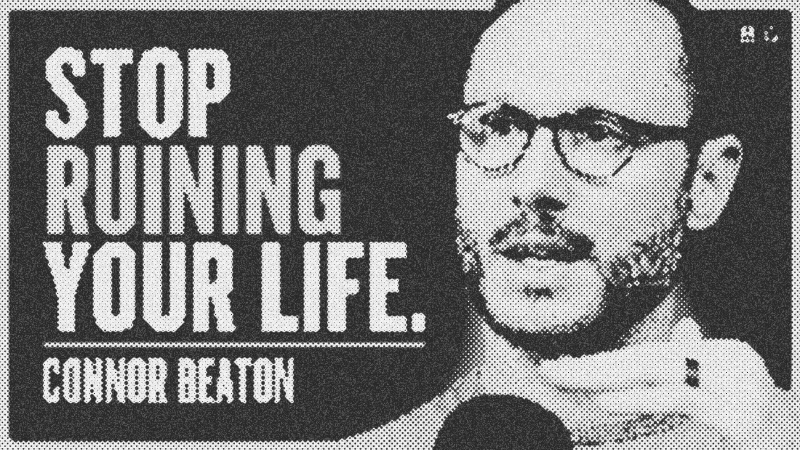
Society praises the man who can outwork, outlast, and outsuffer the competition. Grit, hyper-vigilance, obsession, and a relentless drive for mastery are the engines of a meritocratic world. These are the very qualities that build startups, win championships, and secure promotions. He is celebrated in public for his infinite capacity to endure discomfort, for treating pain as just another variable to be managed. This becomes his superpower. The problem is, this tool doesn't have an off-switch. The same skill set that allows him to work 16-hour days to build his company is the one he applies to a toxic relationship, his failing health, or his profound loneliness. He treats his own suffering as a challenge to be conquered through sheer force of will. He becomes, as speaker Connor Beaton notes, the David Goggins of suffering, believing he can carry any burden, no matter how damaging. The sword that is so effective on the fore-swing nicks him deeply on the back-swing. The capacity that is praised in public becomes catastrophically toxic in private. He cannot compartmentalize this ability. He is unable to recognize when endurance becomes maladaptive, when pushing through pain is no longer noble but deeply self-destructive. The warning signs—the anxiety, the depression, the breakdown of relationships—are viewed not as signals to slow down, but as new challenges to be overcome with more grit. He hits the brakes only after he’s already gone over the cliff, because the very mechanism designed to keep him safe is the one driving him toward ruin.
Fueling Success with Shame
For many high-performing men, the primary fuel source for their ambition is not passion or purpose, but shame. This is a form of dark motivation, a relentless drive born from a need to run away from something. He is running from the man his father told him he would become. He is running from the pain of his childhood. He is running from a deep-seated feeling of inadequacy. Self-hatred becomes his rocket fuel. He channels this internal pain, this rage, into building an external beast—a man who is unimpeachable in his success and accomplishments. Excellence is achieved not through self-love, but through self-deprecation. This is a critical distinction in the psychology of motivation. While pain can be a powerful catalyst for change, using shame as a long-term fuel source has a definitive shelf life. The entire motivational structure is built on an external locus of control. He is driven to achieve the accolades, the awards, the recognition, believing that these external markers will finally silence the internal critic. But they never do. When he finally reaches the summit—wins the championship, sells the company—there is no internal architecture to receive the victory. He cannot enjoy it. He cannot internalize the success because he has never developed the capacity for self-recognition or self-worth independent of his performance. The accolades feel hollow. With nothing left to run toward, and the shame still present, the crash comes. This is when we see the public figures implode, their stories splashed across headlines. The fuel tank is empty, and the only thing remaining is the pain they were trying to outrun.
The Fear of Falling Apart
Even when a high-performing man recognizes that his internal system is failing, he faces another monumental hurdle: the fear that doing the emotional work will destroy his ability to perform. How can he run a hedge fund, lead his team, or provide for his family if he
- Aragorn
- 6%· people
- Carl Jung
- 6%· people
- Connor Beaton
- 6%· people
- David Goggins
- 6%· people
- Dr. James Hollis
- 6%· people
- Other topics
- 71%
How to Stop Wasting Your Life - Connor Beaton
WatchChris Williamson // 1:58:25
