Behind the Lens: The Psychology and Mechanics of the Modern Adult Industry
The Architecture of a Hidden Industry
We often view the adult entertainment world through a narrow, often clouded lens. For most, it remains a digital abstraction, separated from the reality of labor, logistics, and human psychology. However, sitting down with a professional like Sienna Day reveals a world that is remarkably structured, highly technical, and increasingly driven by individual entrepreneurship. This is no longer just about the acts themselves; it is about the intersection of personal agency and a global marketplace that is rapidly decentralizing. Understanding this industry requires us to look past the surface level and examine the grit, the preparation, and the mental resilience required to thrive in a space that is as demanding as it is misunderstood.
Modern adult entertainment has moved far beyond the "casting couch" tropes of the past. Today, it functions as a complex ecosystem where performers must act as their own marketing departments, health coordinators, and financial strategists. The barrier between the performer and the audience has collapsed, replaced by a direct-to-consumer model that puts more power—and more responsibility—into the hands of the individual. This shift toward autonomy is a profound reflection of broader trends in the digital economy, where the "middleman" is being phased out in favor of personal branding and direct community engagement.
Navigating the Professional Hierarchy
Contrary to popular belief, the adult industry operates with a rigid internal hierarchy and a specific career trajectory. For many performers, the journey begins with solo work or softcore content before progressing into more intense categories. This isn't just about escalating content; it is a calculated strategy to build a brand and maximize longevity. Starting with "girl-girl" or solo content allows a performer to establish a fan base before moving into the high-demand, high-compensation tiers of "boy-girl" or more specialized niches.
This progression serves two purposes: it protects the performer's market value and ensures they have the mental and physical preparation for the rigors of professional sets. On high-end sets like those produced by Brazzers or Digital Playground, the environment is closer to a Hollywood production than a clandestine operation. There are call times, hair and makeup artists, lighting grids, and technical riders. Performers aren't just "having sex"; they are managing angles, maintaining energy for twelve-hour days, and performing for multiple cameras simultaneously. It is a grueling physical performance that requires the same level of focus and stamina as professional athletics.
The Technical Reality of Physical Preparation
One of the most overlooked aspects of this profession is the sheer level of physical maintenance required. For a performer like Sienna Day, the body is the primary tool of the trade, and its upkeep is a full-time commitment. This extends far beyond the gym—though heavy lifting and intense conditioning are standard. The preparation for specific scenes, particularly those involving anal or high-intensity DP (double penetration), involves a technical process that the average viewer never sees.
This involves rigorous dietary control, specialized hygiene protocols like douching, and even "anal yoga" or stretching routines to prevent injury. Performers must understand their own anatomy with clinical precision to ensure they can meet the demands of a director while maintaining their long-term health. When we hear about thirty days of back-to-back high-intensity filming, we aren't hearing about a month of pleasure; we are hearing about a month of extreme physical labor. The mental resilience required to treat one's most intimate acts as a professional obligation is a psychological feat that few other professions demand.
The Great Decentralization: From Agencies to OnlyFans
The most significant shift in the industry over the last five years is the rise of platforms like OnlyFans and AdmireMe.VIP. For decades, performers were at the mercy of large production houses and predatory piracy sites. The revenue model was broken: a performer would be paid a flat fee for a scene, and then that content would be pirated and viewed millions of times without the performer seeing another cent. The rise of subscription-based models has fundamentally changed the power dynamic.
Performers are now migrating away from traditional agencies to become independent creators. By leveraging social media following to drive traffic to private membership sites, stars like Sienna Day can earn far more than they ever did through studio contracts. This is the "democratization of adult content." It allows for a more sustainable career where the performer owns their content and, more importantly, owns the relationship with their fans. This shift hasn't just increased earnings; it has increased safety and agency. When a performer is their own boss, they have the absolute right to set boundaries, refuse scenes, and control their own narrative.
Social Stigma and the Psychology of Performance
Despite the professionalization of the industry, the social stigma remains a heavy burden. Navigating relationships, family dynamics, and public perception requires a high level of emotional intelligence. There is a strange dichotomy where a performer can have fifty million views and a global fan base, yet still face harassment or "shadow-banning" on mainstream social platforms. The psychological impact of being a "sex object" in the public eye while trying to maintain a private, intimate life is a delicate balancing act.
Many performers find that their sexual appetite in their personal life becomes compartmentalized or desensitized. When sex is work—complete with lighting cues and camera angles—it loses its spontaneous, emotional character. Reclaiming that intimacy in a private relationship is a common challenge. Furthermore, the risk of harassment from "haters" or obsessive fans is a constant reality. Success in this field requires more than just physical beauty; it requires a thick skin and a clear sense of self-worth that isn't dependent on external validation or the judgment of a society that consumes the content while condemning the creator.
Conclusion: The Future of Adult Labor
The adult industry is often the canary in the coal mine for technological and economic trends. From the adoption of VHS to the rise of streaming and now the creator economy, this sector frequently leads the way. As we look forward, the trend toward decentralization will likely accelerate. We are seeing the birth of a new kind of professional: the self-managed, tech-savvy, and physically elite performer who treats their career with the same seriousness as a CEO treats a startup. By pulling back the curtain on the technical and psychological realities of this world, we move closer to a more honest conversation about labor, agency, and the complex reality of modern human connection.
- Sienna Day
- 19%· people
- AdmireMe.VIP
- 6%· products
- Adriana Chechik
- 6%· people
- Brazzers
- 6%· companies
- Chelsea Ferguson
- 6%· people
- Other topics
- 56%
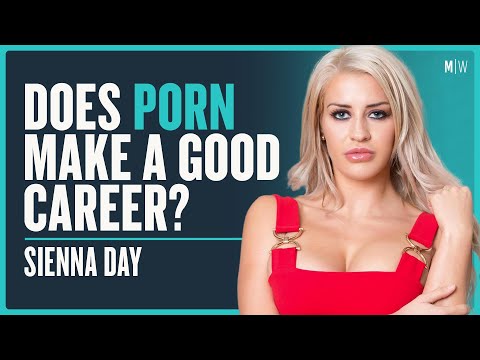
What Is Life Like As A Pornstar? | Sienna Day | Modern Wisdom Podcast 101
WatchChris Williamson // 1:12:23
