Dispenza warns how daily thoughts wire physical disease
Why we stay trapped in old patterns of suffering
Most people wake up and immediately search for their problems. Those problems are actually memories, etched deeply into the neurological pathways of the brain. The moment you recall a struggle, you connect with the past. Your brain fires a sequence of historical circuits, and your body recreates the exact chemical state of that past event. Thoughts serve as the language of the brain. Feelings serve as the language of the body. When you think of a past trauma and feel anxious, your body believes it is living in that traumatic moment right now. It cannot tell the difference between a real event and an imagined one.
By the time we reach mid-life, ninety-five percent of who we are is a set of memorized behaviors, emotional reactions, and unconscious attitudes. We operate on automatic pilot. We run through the same morning routines, drive the same routes, and see the same people. This predictable schedule means your yesterday is simply laid on top of your tomorrow. If you can predict every moment, you are living in the known.
We become addicted to our own stress hormones. When we perceive a threat, the fight-or-flight system floods our blood with adrenaline and cortisol. This rush of energy acts as a physical shock. People use their external problems, toxic relationships, and high-stress careers to get that exact hormonal hit. They need the bad news to feel alive. They need the struggle to confirm their identity. This constant state of survival keeps the body out of homeostasis. Over time, these stress chemicals pull the genetic triggers that cause chronic disease. Your thoughts literally make you sick.
The biological physics of personal transformation
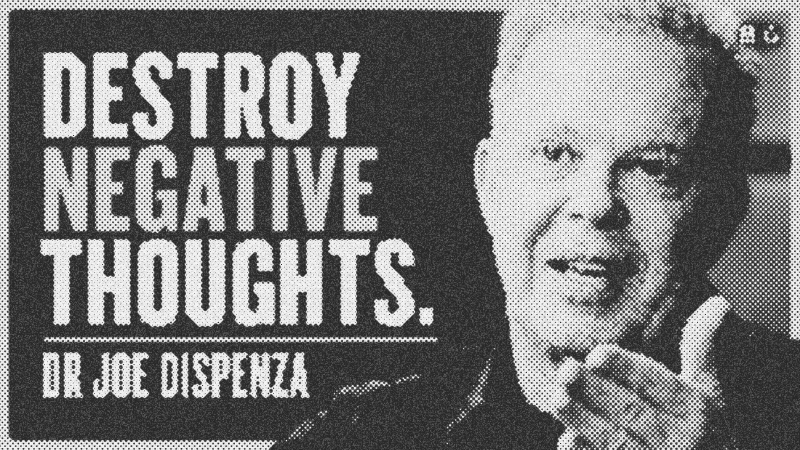
To change your life, you must change your biology. True transformation requires crossing a bridge from the known to the unknown. It is not about thinking happy thoughts while your body feels miserable. Positive thinking fails because the body is still chemically programmed for suffering. A happy thought cannot get past the brainstem if the physical operating system is drowning in guilt.
When we study the biophysics of change, we find that the mind and physical matter are joined. Dr. Joe Dispenza has partnered with researchers at the University of California San Diego to measure what happens during deep meditation. The data shows that the nervous system is the ultimate pharmacy. It produces powerful natural pain relievers and immune boosters without any outside drugs.
When you move from a narrow focus on your physical problems to a broad focus on empty space, your brain waves change. You shift from high beta waves, which signal stress and scatter, to alpha and theta waves. Alpha waves make you creative and calm. Theta waves open the door to the subconscious mind. In this state, you are highly suggestible. You can insert new intentions directly into your body's operating system.
If you relax your body completely while remaining awake, your brain can enter a state of high coherence. This creates a surge of gamma brain waves. Gamma is not a state of fear or panic. It is a state of physical ecstasy and super-consciousness. When this occurs, the autonomic nervous system organizes itself. It sends a highly ordered signal to every cell in the body. We see immediate, profound shifts in cellular health, gene expression, and immune response.
Simple routines to reprogram your subconscious mind
Reprogramming your life requires daily practice. It cannot be a shallow intellectual exercise. You must train your body to understand what your mind has learned. There are specific physical windows when the door to your subconscious operating system is wide open: right before you fall asleep, and right after you wake up.
In these moments, your brain naturally transitions between wakefulness and sleep. You are sliding between beta, alpha, theta, and delta waves. Instead of reaching for your phone the second you open your eyes, use this liminal state to build a new self.
Start your morning by asking: What is the greatest ideal of myself that I can be today? Rehearse your behaviors in your mind. Close your eyes and see exactly how you will respond when you encounter stress or difficult coworkers. This mental rehearsal grows new physical connections in your brain. To your brain, it looks like you have already lived that future. The hardware is installed. Repeat it daily, and the behavior becomes automatic.
Next, identify the unconscious thoughts you want to stop. Write down the voices of limitation: "It is too hard," "I will never change," or "I am not good enough." Become so conscious of these voices that you would never let them run without your permission. Do the same with your actions. If you want to be happy but spend your afternoon complaining, judging, and feeling sorry for yourself, you are repeating the old program.
Finally, practice gratitude before your future happens. Most people wait for their circumstances to change before they feel grateful. They wait for the wealth, the healing, or the new relationship. But gratitude is the ultimate state of receiving. When you feel grateful, your body believes the wonderful event has already occurred. It begins to change its chemistry immediately. We have seen that just four days of elevated gratitude can boost immunoglobulin A, the body's primary immune defense, by fifty percent.
Crossing the river of change despite physical discomfort
When you decide to break an old pattern, your body will rebel. It has been the master of your mind for years. The physical body prefers the comfort of familiar suffering over the terrifying uncertainty of the unknown.
As you sit to meditate, your body will scream. It will tell you that you are too tired, that you have too many emails to answer, or that your legs hurt. It will try to make you angry or anxious so you return to your habitual chemical state. This is physical withdrawal. You are breaking a literal addiction to your past emotions.
When this happens, you must treat your body like an animal you are taming. Settle it back down into the present moment. Tell it that you are the mind, and it is the servant. Every time you catch yourself drifting into a predictable future or a painful past, pull your attention back. Each time you do this, it is a physical victory. You are reclaiming your energy.
This process feels uncomfortable. It feels like a biological death. You are letting the old self burn so a new self can emerge. If you white-knuckle it, you will fail. You must learn to relax into the void of the unknown. When you realize that nothing bad happens in the unknown, you stop trying to predict the next moment. Your heart opens, your brain synchronizes, and you step out of survival mode.
Stepping into the generous present as a creator
When you stop reacting to your environment, you stop giving your energy away. You reclaim the power to build your own destiny. You transition from being a victim of your circumstances to a creator of your life.
We see this shift clearly in our community work. In a podcast with Theo Von, UFC champion Sean Strickland shared a rare, vulnerable moment about childhood trauma. His pain was visible and heavy. That kind of childhood conditioning runs deep because children's brains operate mostly in theta waves, making them sponges for trauma. But when we allow space for vulnerability, when we sit with our pain without trying to escape it, it eventually loses its charge.
When you strip the emotional charge away from a traumatic memory, it simply becomes wisdom. You no longer belong to your past. You are free to love yourself. To love yourself, you must practice feeling love. You must open your heart, even when it is difficult.
We see this in our remote healing sessions. When a group of people comes together with the sole intention of loving and healing another person, they create a field of energy. They are not looking to get anything from the world. They are giving. The gratitude they receive in return feeds their own hearts, raising their oxytocin and nitric oxide levels to heights never seen in medical drug studies.
This is the power of interdisciplinary learning. By combining neuroscience, quantum physics, and biology, we demystify the miraculous. We show that anyone, regardless of their past or their struggles, can rewire their physical body. You do not need an expensive retreat or an outside drug. You just need to sit with yourself, close your eyes, and choose to cross the river of change.
- Chris Williamson
- 17%· people
- Dr. Joe Dispenza
- 17%· people
- Modern Wisdom
- 17%· podcasts
- Sean Strickland
- 17%· people
- Theo Von
- 17%· people
- University of California San Diego
- 17%· companies
7 Things Successful People Do Every Single Day - Dr Joe Dispenza (4K)
WatchChris Williamson // 2:47:19
