Luxury Beliefs and the Hidden Mechanics of Modern Status
The Emergence of the Luxury Belief Class
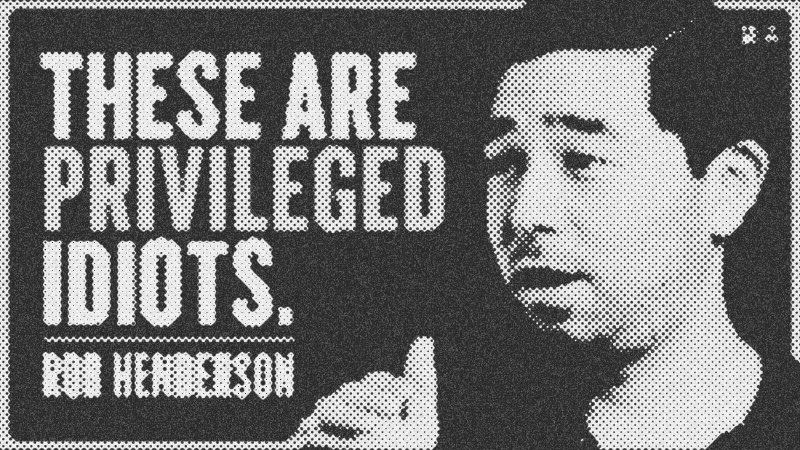
Societies have always organized themselves into hierarchies. In the past, the elite signaled their position through the conspicuous consumption of physical goods. Thorstein Veblen famously analyzed this in the late 19th century, noting how tuxedos, evening gowns, and intricate hobbies served as markers of high status. Today, however, the signaling game has shifted. As material goods have become cheaper and more accessible, they no longer provide a clear signal of who belongs to the upper class. A person in a middle-income bracket can often afford the same smartphone or designer bag as a millionaire. To distinguish themselves, the new elite have moved into the realm of ideas.
Rob Henderson identifies this phenomenon as the rise of luxury beliefs. These are ideas and opinions that confer status on the affluent while often inflicting costs on the lower classes. The defining characteristic of a luxury belief is that the believer is shielded from the consequences of that belief. This creates a disconnect where the chattering class can advocate for social experiments and radical policies that devastate marginalized communities, all while maintaining their own safety and prestige.
This shift represents a move from economic capital to cultural capital, a concept explored by Pierre Bourdieu. The elite convert their wealth into specialized knowledge and moral posturing. By adopting certain progressive or counter-intuitive stances, they signal that they have attended the right universities, consume the right media, and move in the right social circles. It is a modern form of gatekeeping that relies on linguistic and ideological complexity rather than just a bank balance.
The Anatomy of Social Devastation
The most striking example of a luxury belief in recent years is the movement to Defund the Police. Analysis of survey data reveals a sharp divide: the highest income Americans were the most supportive of this movement, while the lowest income Americans—the very people who live in neighborhoods with the highest crime rates—were the least supportive. For a wealthy individual in a gated community, police presence is a distant abstraction. For a resident of a high-crime area, the police represent a vital lifeline. When funding is cut and police morale plummets, it is not the wealthy suburbs that suffer the spike in homicides and assaults; it is the vulnerable urban centers.
Another example is the denigration of the nuclear family. At elite institutions like Yale University and the University of Oxford, it is fashionable to describe marriage as an outdated, patriarchal institution. Yet, the statistics show a massive divergence in behavior versus rhetoric. Over 80% of Ivy League graduates come from two-parent households and plan to raise their own children in stable, married environments. They reap the benefits of family stability while publicly downplaying its importance.
This rhetoric filters down to the working class, who may take the elite's advice at face value. Without the financial safety net or social support of the upper class, the breakdown of the family unit leads to catastrophic outcomes for children: increased likelihood of poverty, incarceration, and substance abuse. The elite have effectively 'monopolized' the most stable family structures while promoting a culture of instability for everyone else.
Higher Education and the Performance of Equality
The crisis within elite academia reveals the cracks in this status game. The recent fallout involving the presidents of Harvard University, MIT, and University of Pennsylvania highlighted a profound ideological rot. These institutions claim to be bastions of egalitarianism and inclusivity, yet they maintain rigid, hidden hierarchies. Rob Henderson points to the treatment of Christopher Rufo and the Harvard Extension School as a case study in snobbery.
When Rufo, a critic of the academic establishment, was found to have a degree from the Extension School, members of the 'chattering class' immediately moved to delegitimize him. They argued it wasn't a 'real' Harvard University degree, despite the school's own marketing suggesting otherwise. This revealed the duplicity of the elite: they preach equity and social mobility while clutching tightly to the 'miserable fragments of social prestige' that allow them to feel superior to the 'unwashed masses.'
As George Orwell noted in The Road to Wigan Pier, upper-class snobs often pine for a classless society while clinging to every marker of their own rank. In the modern university, this manifests as a obsession with 'lived experience' that is highly selective. If your lived experience involves the foster care system or the military, but you disagree with the prevailing orthodoxy, your experience is discarded. The ideology serves to protect the status of the believers, not the welfare of the marginalized.
From Squalor to the Ivory Tower
Understanding the impact of these beliefs requires looking at the reality of poverty and instability. Rob Henderson shares his own journey from the foster care system and the US Air Force to the heights of global academia. His perspective is unique because he has seen both the 'code' and the 'matrix.' He argues that childhood instability, rather than just material poverty, is the true predictor of negative life outcomes.
Instability—defined by moving frequently, having multiple non-parental adults in the home, and experiencing family chaos—creates a psychological environment where long-term planning feels impossible. When your world is unpredictable, you develop a short-term mating strategy and a high-stress response. The elite, who enjoy immense stability, often fail to realize that their 'progressive' ideas about loosening social norms and de-stigmatizing impulsive behavior are precisely what fuel this instability in lower-income communities.
Rob Henderson credits his success not to a change in his material circumstances, but to the imposition of structure. The US Air Force provided an environment where self-discipline was a requirement for survival. This structure allowed him to develop the habits necessary to eventually excel at Yale University. It is a powerful reminder that while we are all subject to our genetic predispositions and our environments, individual agency still plays a critical role. We are not prisoners of our IQ or our upbringing, but we do need the right frameworks to rise above them.
The Skill of Social Integration
As individuals move between social strata, they must learn new sets of social skills. One of the most underrated is the ability to give and receive compliments. In high-status environments, communication is often subtle and coded. Rob Henderson notes that men and women tend to compliment each other differently: women often focus on appearance to signal solidarity, while men focus on accomplishments.
For someone coming from a background of 'squalor,' receiving a compliment can feel threatening or foreign. It requires a level of self-worth that is often eroded by a chaotic childhood. Learning to graciously accept praise is a part of the psychological work required to move between worlds. It is an act of acknowledging one's own progress and agency.
Similarly, the way we consume information defines our intellectual status. Nassim Taleb once joked that the opposite of reading isn't 'not reading,' but reading something like The New Yorker. The point is that much of what passes for high-status intellectual consumption is actually just ideological reinforcement. True intellectual growth comes from engaging with timeless ideas, taking meticulous notes, and using 'forced recall' to integrate knowledge into your long-term memory. It is a disciplined habit, much like a gym routine, and it is the only way to truly build an independent mind.
Reclaiming Agency in a Divided World
The path forward requires a recognition of the 'two-step potential theory.' We must acknowledge the real-world limitations imposed by genetics and environment—the 50% that is out of our hands. But we must also fiercely protect the 50% that remains under our control. By choosing discipline over motivation and focus over ideological signaling, individuals can navigate even the most hostile social landscapes.
The 'Luxury Belief' era may eventually give way to a new form of status seeking, but the fundamental human desire to signal rank will remain. The challenge for the modern seeker of personal growth is to see through the status games and focus on what is true and what is stable. As we've seen, the most valuable 'luxury' isn't a trendy opinion that harms others; it is the discipline to build a stable life and the resilience to help others do the same. Growth happens one intentional step at a time, away from the performance of morality and toward the reality of character.
- Rob Henderson
- 16%· people
- Harvard University
- 6%· organizations
- US Air Force
- 6%· organizations
- Yale University
- 6%· organizations
- Alexander DatePsych
- 3%· people
- Other topics
- 61%
The Real Agenda Of Those In Power - Rob Henderson
WatchChris Williamson // 1:48:10
