Skip the Line: The Psychological Art of Experimental Living
The Fallacy of the Perfect Plan
Most people view life as a linear progression where every move must be calculated, risk-mitigated, and polished before it ever sees the light of day. We spend months researching the perfect gym, years waiting for the right moment to start a business, and decades wondering what our true passion might be. This analytical paralysis stems from a fundamental misunderstanding of how growth actually occurs. You cannot think your way into a passion; you must act your way into it. Personal evolution is an emergent property of action, not a pre-meditated outcome of deep thought.
When we treat our lives as a series of experiments rather than a high-stakes performance, the weight of failure evaporates. An experiment doesn't fail; it simply yields data. If you try stand-up comedy and no one laughs, you haven't failed as a human—you have just discovered that your current material needs a higher level of 'tightening.' This shift in perspective transforms the terrifying world of the unknown into a playground for the curious. By removing the ego from the outcome, we allow ourselves to explore the vast sample size of human experiences that most people never touch because they are too busy planning for a 'perfect' life that doesn't exist.
The 10,000 Experiment Rule
We have long been told that mastery requires 10,000 hours of deliberate practice. While this holds weight for repetitive, closed-system skills like playing the piano or memorizing digits, it often falls short in the chaotic, multi-dimensional world of modern careers and creative pursuits. For those who want to accelerate their progress, the 10,000 Experiment Rule offers a faster path. Every experiment you conduct—whether it is testing a new podcast format or trying a different way to pitch a client—teaches you more in a few hours than weeks of theoretical study.
Skipping the line is not about taking shortcuts or cheating the system; it is about differentiating yourself so profoundly that you are no longer competing in the same hierarchy as everyone else. Consider the comedian Chris Turner. By combining his expertise in freestyle rap with traditional stand-up, he created a unique offering that bypassed the traditional decade-long grind of the comedy circuit. He didn't just get better at telling jokes; he became the only person doing exactly what he does. When you are the only one in your category, the line you were supposed to wait in simply disappears.
The Strategic Power of Taking Two Steps Back
One of the most difficult barriers to rapid growth is the human ego. We are conditioned to believe that we must always move upward—higher titles, bigger salaries, more prestige. However, skipping the line often requires the humility to take two steps backward to move four steps forward. This 'big fish in a small pond' strategy involves taking a lower-status position in an environment that provides high-level access or specialized knowledge.
Take the example of a lawyer who wants to join the CIA. Rather than waiting in a traditional recruitment line, he took an internship intended for teenagers. This move looked like a regression on paper, but it gave him the specific 'top-secret clearance' and proximity to leadership that allowed him to solve a high-level problem and catapult past his peers. Similarly, Ryan Holiday left college to become an apprentice for Robert Greene. By doing the 'low-level' work of a research assistant, he gained a front-row seat to the mechanics of bestselling book production, which eventually allowed him to dominate the publishing world himself. Your ego wants the title; your growth needs the access.
Creativity as a Muscle of Resilience
Creativity is not an elusive spark of divinity reserved for the 'artistic.' It is a functional muscle that must be exercised daily. When you force yourself to come up with ten ideas every day—even if they are bad ideas—you are training your brain to see opportunities where others see obstacles. This creativity is the engine of the experimental lifestyle. It allows you to look at a stagnant situation and ask, 'What if I tried this instead?'
These experiments should be low-friction and low-resource. You don't need a million dollars to test an idea; you need a half-hour and a bit of courage. Performing one-liners on a subway car is an uncomfortable experiment, but it provides immediate, brutal feedback that no classroom can replicate. This type of 'real-world' learning builds a level of resilience that makes you untouchable. When you have survived the silence of a disinterested subway crowd, the pressure of a boardroom or a stage feels manageable. You are not just building a skill; you are building a version of yourself that is comfortable with the discomfort of growth.
Exponential Networking and Idea Abundance
In a world obsessed with scarcity, most people hoard their connections and ideas. They fear that if they introduce two talented people, they will be left out of the loop. This is linear thinking. Exponential power comes from being the 'node' that connects others without expecting an immediate return. When you connect your network to itself, you aren't losing a contact; you are creating a web of value where you are the common denominator.
This same principle applies to sharing ideas. Giving away your best ideas for free is the ultimate signal of abundance. If you email a business ten ways they can improve their sales with no strings attached, you aren't losing intellectual property—you are building a reputation as a high-value problem solver. Some will ignore you, but the ones who respond will be the ones who help you skip the line. By giving the 'copy' of your connection or idea to others, you strengthen your own position in the ecosystem. Growth is not a zero-sum game; it is an infinite game played by those willing to experiment, connect, and share.
- 10,000 Experiment Rule
- 6%· products
- 48 Laws of Power
- 6%· products
- Choose Yourself
- 6%· products
- Chris Turner
- 6%· people
- Chris Williamson
- 6%· people
- Other topics
- 69%
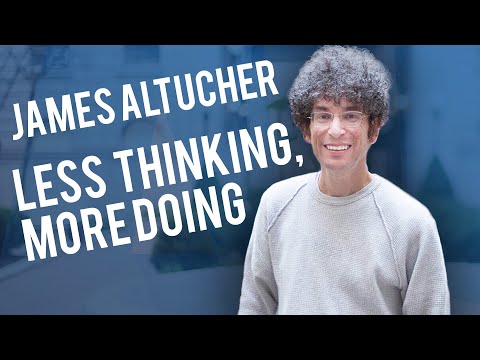
Treat Your Life As An Experiment | James Altucher | Modern Wisdom Podcast 138
WatchChris Williamson // 44:25
