The Anatomy of Resilience: Navigating Anxiety, Overthinking, and the Path to Self-Discovery
Navigating the Labyrinth of Human Emotion
We often treat our internal world as something that needs to be solved, rather than experienced. In my practice as a psychologist, I frequently see individuals who feel they are failing because they cannot simply "switch off" a difficult feeling or "switch on" a positive one. The truth is that humans do not come with a manual for emotional management. We are remarkably complex biological machines navigating a world that demands high output while offering very little in the way of emotional literacy. Dr. Julie Smith highlights that our vocabulary for feelings is often too limited to capture the qualitative nuances of our daily lives. Joy in one context feels nothing like joy in another, yet we use the same word for both. This lack of precision can make us feel like we are drowning in a sea of sensations we cannot name.
One of the most significant challenges in modern mental health is the push to quantify the human experience. We are asked to rate our pain on a scale of one to ten or track our moods on digital apps. While these tools have their place, they often strip away the complexity that makes us who we are. You do not feel a number; you feel a textured, multi-layered set of reactions to your environment. Acknowledging that it is okay for your inner life to be confusing is the first step toward resilience. Growth does not happen by simplifying your emotions until they are manageable; it happens by expanding your capacity to hold those emotions without being overwhelmed by them.
The Mental Load and the Habit of Overthinking
Overthinking is rarely a flaw in your character; it is usually a response to a high mental load. We live in an era where technology promised ease but delivered an increased expectation of productivity. We are juggling more roles than ever before, often trying to excel in our careers while simultaneously being the perfect parent or partner. This constant state of high arousal and stress makes your brain vulnerable to ruminative loops. Your brain is not broken when it overthinks; it is actually doing its job. It perceives a high-stress environment and assumes that there must be a threat nearby. To protect you, it starts scanning for every possible worst-case scenario. This is your state of readiness, an evolutionary mechanism designed to keep you alert in unpredictable surroundings.
To break the cycle of overthinking, we must move beyond just trying to stop the thoughts. We have to look at the full context of our lives. If your blood pressure is high and you are on the go from dawn until dusk, your brain is receiving constant signals that things are not okay. Labeling yourself as a "worrier" can be a trap because it suggests that this state is unchangeable. Instead, think of overthinking as a habit fueled by your physiological state. When you are in the middle of a loop, the most effective intervention is building awareness of the cycle as it happens. By drawing out the pattern—identifying the trigger, the horror-story thoughts that follow, and the subsequent spike in anxiety—you can begin to recognize the "room" you are in while you are still inside it. This insight allows you to take a breath and choose a different path before the momentum becomes unstoppable.
Action as the Antidote to Anxiety
There is a profound difference between sitting in fear and moving with it. Fear is information; it tells you that something important is at stake. However, when fear leads to passivity, it turns into a paralyzing force. I have always believed that action is the most potent remedy for a ruminative mind. When you take even one intentional step, you shift from being the "prey" of your circumstances to being the "predator" of your problems. This doesn't mean the fear disappears; it means you are using that energy to fuel forward motion rather than allowing it to implode within you.
One of the most powerful psychological tools at our disposal is the practice of "acting opposite" to our urges. When anxiety tells you to hide under the covers or avoid a difficult conversation, your instinct is to seek comfort and safety. But comfort is often where growth goes to die. By recognizing the urge to retreat and choosing to lean in instead, you build a mental muscle. You can practice this in small, almost trivial ways—like resisting the urge to crunch a piece of candy—to prepare yourself for the moments when the stakes are much higher. Courage is not the absence of fear; it is the realization that something else is more important than that fear. When you choose action, you discover that the limits you thought were solid walls are actually just smoke screens.
Unpacking the Narrative of Our Childhood
Many of us carry the weight of our upbringing into our adult lives without even realizing it. We see our current struggles as a direct result of our parents' mistakes. While it is true that our early environments shape our attachment styles and inner voices, remaining in a state of resentment is a recipe for long-term misery. Understanding your childhood should be a constructive process, not a list of grievances. It involves recognizing that your parents were also humans navigating their own complex histories and limitations. They likely grew up in an era with far less emotional education than we have today, operating with the only coping mechanisms they knew.
Healing happens when we shift from a parent-child dynamic to an adult-to-adult relationship. We often wait for an apology or a moment of insight from our parents that may never come. Resting your peace of mind on someone else's realization is a dangerous game. Instead, we must look at the lineage of our families with a sense of perspective. Your parents' flaws were likely the dark side of their virtues. Perhaps a father who was emotionally distant was working eighty hours a week to ensure you never went hungry. There are no solutions in human relationships, only tradeoffs. By nurturing gratitude for the positive elements and taking responsibility for the person you are now, you break the cycle of generational trauma. You become the one who chooses which patterns to keep and which to discard.
The Virtue of Choosing Discomfort
We often pathologize our natural tendencies, such as people-pleasing, without understanding where they come from. People-pleasing is not just being "nice"; it is a state of hyper-vigilance toward the feelings of others, often at the expense of one's own well-being. It is a survival strategy born from a fear of rejection or disapproval. To overcome this, we must learn the skill of assertiveness. This isn't about becoming aggressive; it's about learning that you have a right to your own needs and boundaries. If people cannot trust your "no," they can never truly trust your "yes."
Building this skill requires starting small. If you find it impossible to say no to a major project, start by saying no to a minor social invitation. Notice the anticipatory anxiety—the nightmare you've created in your head about the other person's reaction—and then watch as it fails to materialize in reality. Most people are far less focused on your boundaries than you think they are. As you accumulate these small victories, you begin to realize that disappointing someone else is often the price of being honest with yourself. This is the core of resilience: the willingness to be uncomfortable in the short term to maintain your integrity in the long term. You are not a fragile creature that needs to be protected from every storm; you are a resilient being capable of navigating the roughest waters if you have your own back.
Cultivating a Compassionate Inner Coach
We are often our own harshest critics, believing that a self-castigating inner voice is the key to our success. We treat ourselves with a level of contempt we would never show to a friend or even a stranger. Many high performers fear that if they stop hammering themselves, they will lose their drive. But consider an elite athlete: they don't hire their high school bully to coach them. They hire someone who is honest, demanding, and respectful—someone who wants them to win. Your inner voice should function the same way.
Self-compassion is not about making excuses; it is about providing the support you need to learn from your mistakes. When you fail, a critical voice triggers shame, which causes you to retreat and avoid. A compassionate voice acknowledges the failure and asks, "What is the next step?" This shift from contempt to curiosity is what allows for sustainable growth. You don't need to be "perfect" to be worthy of your own support. By being a reliable person for yourself—the kind of person who shows up even when things are difficult—you build an internal foundation that no external challenge can shake. Empowerment comes from the realization that you have the power to choose your tone, your actions, and your path, one intentional step at a time.
- Ben Shapiro
- 10%· people
- Chris Williamson
- 10%· people
- Dr. Julie Smith
- 10%· people
- Element
- 10%· companies
- Function Health
- 10%· companies
- Other topics
- 50%
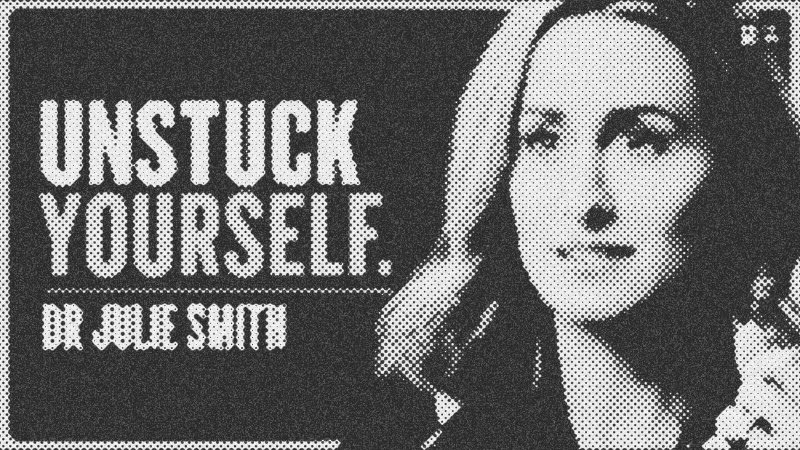
Anxiety & Overthinking Are Habits You Can Break - Dr Julie Smith
WatchChris Williamson // 1:34:06
