The Architecture of Thought: Writing as the Ultimate High-Leverage Skill
The Internal Alchemy of Observation and Routine
True personal growth often begins in the quiet spaces between our high-octane routines. When we step away from the digital noise, our brain chemistry undergoes a fundamental shift. Immersion in a new environment, like the vibrant streets of Morocco, offers a rare opportunity for pure observation. This state of being allows time to expand, moving from a frantic "motorway speed" to a more human, pedestrian pace. This isn't merely a pause; it is a vital part of a rhythmic cycle of tension and release.
Think of life like a rubber band. Constant production and routine create a certain type of tension, but if we never stretch into new experiences, we lose our elasticity. Travel and deep observation add a different kind of tension—the constructive kind that refuels our creative reserves. When we return to our routines, we aren't just restarting; we are capitalizing on the new perspectives we've inhaled. This ebb and flow between the intense focus of work and the expansive nature of observation is what prevents the dreaded dopamine hangover often associated with mindless digital consumption.
Writing as the New Resume and Personal Monopoly
In an era of information abundance, the traditional resume has become a relic. It is a static, one-dimensional document that fails to capture the nuance of a person's thinking. The most significant arbitrage opportunity in the modern career market is the ability to communicate unique ideas effectively. This is where writing becomes a transformative tool. By identifying a small but emerging industry and sharing what you learn publicly, you build a Personal Monopoly.
This three-step strategy—pick an area, learn obsessively, and share openly—functions as a proof of work. It demonstrates your ability to synthesize information and provide value before a transaction even occurs. When you write, you aren't just recording information; you are creating an intellectual beacon that attracts mentors, job offers, and consulting opportunities. Unlike video or audio, which can be perceived as more ephemeral, the written word carries a weight of rigor. Society intuitively trusts the person who has written the book or the definitive article because we recognize the mental discipline required to structure an argument on the page.
The Rigor of Rewriting and the Limits of Language
Writing is the most fundamental form of communication because it forces us to grapple with the "nooks and crannies" of an idea. While conversation can dive deep, writing allows us to see an idea like a kaleidoscope, rotating it and viewing it from every possible angle. The act of rewriting is, in essence, the act of rethinking. It is a malleable medium that allows for infinite refinement—a luxury not afforded by the temporal constraints of live speech or the physical limits of a painted canvas.
Furthermore, our ability to think is directly tied to our capacity for language. If we lack the vocabulary or the structure to articulate a thought, that thought remains a cloudy, nebulous sentiment rather than a sharp insight. Engaging in the difficult work of writing prevents us from becoming detached from our own cognitive processes. It moves us beyond mere notions and into the realm of structured, defensible logic. For the individual, this process is therapeutic; for the professional, it is the highest point of leverage available in the digital age.
Escaping the Trap of the Perpetual Now
Modern social media platforms are designed to keep us trapped in the Perpetual Now. Our feeds are dominated by content created within the last 24 hours—ephemeral updates, fleeting trends, and reactionary takes. This structural bias makes us blind to our place in history and overwhelms us with the present. When we consume only what is new, we lose the wisdom of what has endured.
To counter this, we must look toward the Lindy Effect, which suggests that the future life expectancy of an idea is proportional to its current age. If an article from twenty years ago is still being shared, it possesses a level of insight that a two-day-old "trending" post likely lacks. Breaking free from the never-ending now requires a conscious effort to seek out "time-agnostic" ideas. By curating a mental library of enduring concepts rather than chasing the latest notification, we stabilize our worldview and develop a more resilient mindset.
Elevating the Plane of Conversation
Most modern interactions are merely "intersecting monologues" where individuals compete for attention or wait for their turn to speak. However, a great conversation functions like food and drink for the soul. It is an elevation to a new plane of experience where you discover parts of yourself you didn't know existed. These high-velocity exchanges are where growth is catalyzed.
When we bring the rigor of writing into our conversations, we stop being reactive and start being insightful. We move away from the beige, vanilla content that dominates the top of the social media "tree" and begin to grapple with difficult, meaningful ideas. Whether it's through a podcast like the North Star Podcast or a deep one-on-one dialogue, the goal is to iterate on ideas quickly. By being open to feedback and embracing the friction of intellectual debate, we move past superficial sentiment and toward genuine self-discovery.
Conclusion: The Future of Intellectual Discovery
The shift from information scarcity to information abundance has created a paradox: it is easier than ever to learn, yet harder than ever to think clearly. As we move forward, the individuals who will thrive are those who can filter the noise and focus on high-quality knowledge consumption. By mastering the art of writing, we don't just become better communicators; we become more intentional human beings. The future belongs to the "intellectual explorers" who are willing to step out of the perpetual now and build something that lasts.
- David Perell
- 6%· people
- Embedded Growth Obligation
- 6%· concepts
- Eric Weinstein
- 6%· people
- Invest Like the Best
- 6%· podcasts
- James Clear
- 6%· people
- Other topics
- 72%
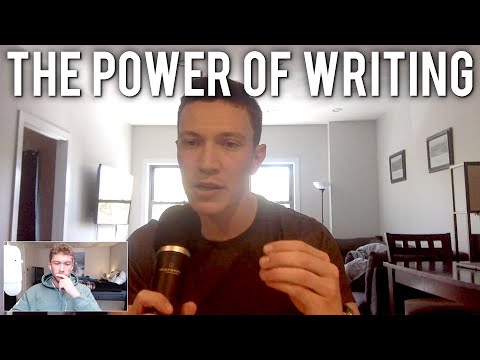
DAVID PERELL | The Power Of Writing
WatchChris Williamson // 52:04
