Milagro: Echoes of Ancient Wonder in the Modern Pursuit of Magic
Humanity's enduring fascination with the inexplicable, the 'miracle' or 'milagro', stretches back to the very dawn of our consciousness. From the cave paintings that whispered of shamanic journeys to the grand temples where ritual transformed the mundane, societies across millennia have sought to touch the edges of the known. This inherent drive, a profound craving for wonder, finds a compelling contemporary expression in Milagro, a short documentary that posits a direct inquiry into what constitutes 'real magic' in our ostensibly rational age. The very title, Milagro, resonates with deep historical echoes, reminding us that the capacity for awe remains a fundamental human truth.
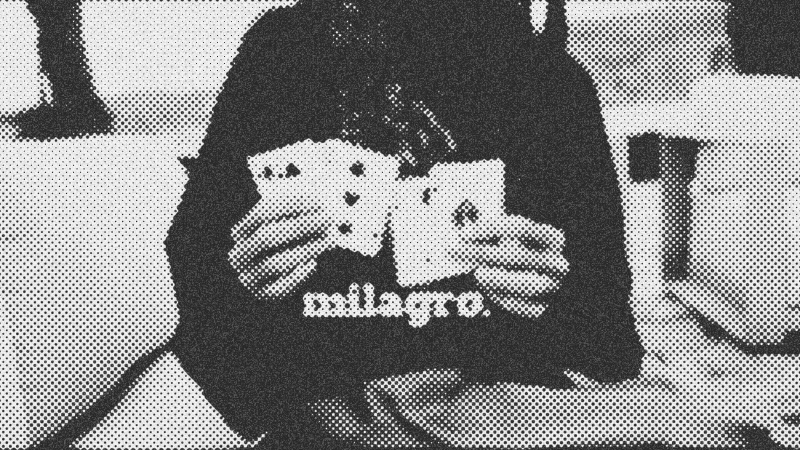
The genesis of such a documentary signals a deliberate, thoughtful contemporary inquiry into this deep-seated human impulse. It is not merely a collection of tricks; it acts as a cultural excavation, gathering modern practitioners, visionary artists, and astute thinkers into a collaborative circle. Individuals like Matt Cooper and Juan Colás, alongside the deft hands of Tony Chang and the perceptive eye of Eric Hu, represent a collective endeavor. They are not simply performers; they are inheritors of an ancient tradition, applying contemporary craft and profound insight to timeless questions. John Steiner, Chen Ting, Axel Adler, and Jesse Michels, among others, contribute to this mosaic, each bringing a unique perspective to the shared journey of defining, or perhaps even manifesting, what 'real magic' signifies today. This diverse group embarks on an exploration, seeking to articulate the subtle yet profound power that lies beyond simple deception, grounding it within the intricate tapestry of human experience and perception.
The convergence of these distinct perspectives and specialized skills, orchestrated through the lens of Milagro, marks the documentary's profound turning point. It is in this collective effort—the shared pursuit by individuals such as Ricky Edit, Tobias Dostal, Doug McKenzie, and Daniel Castillas—that the understanding of 'magic' transcends mere illusion. The inquiry shifts from 'how was that done?' to 'what does this mean?' This collective endeavor frames the experience of magic as something far more profound: a deliberate reshaping of perception, an intentional elicitation of a shared moment of profound wonder. Magic's true power, the film suggests, resides not in a mere defiance of physics, but in its ability to alter human awareness, compelling us to perceive the extraordinary embedded within the familiar fabric of the everyday.
The documentary, by meticulously capturing these explorations and interpretations, does not offer facile answers or definitive explanations for 'real magic'. Instead, it skillfully frames 'magic' as an ongoing dialogue, a living tradition perpetually reinterpreted yet consistently rooted in fundamental human psychology and cultural practice. The outcome is a richer, more nuanced appreciation for the intricate interplay between honed skill, cultivated perception, and shared belief. It unveils magic as a dynamic cultural artifact, continuously evolving yet forever tethered to our deepest human needs.
For those of us who dedicate our lives to studying the intricate belief systems of ancient societies, Milagro offers a vital bridge to the past. This modern cinematic journey illuminates precisely how past civilizations, too, grappled with the fuzzy boundaries of the known and the unknown, constructing elaborate mythologies and rituals around moments of perceived wonder. The lessons drawn from this contemporary exploration resonate across millennia: the fundamental human need for wonder, for the 'milagro', persists undiminished. Magic, in its purest, most profound sense, remains a potent force—a narrative we construct, a shared experience we ardently seek, and an intrinsic aspect of what it means to be human, connecting us across the vast expanse of time to the earliest storytellers and ritualists who first dared to shape perception.
- Axel Adler
- 8%· people
- Chen Ting
- 8%· people
- Daniel Castillas
- 8%· people
- Doug McKenzie
- 8%· people
- Eric Hu
- 8%· people
- Other topics
- 58%
Milagro - A Short Documentary about Real Magic
WatchChris Ramsay // 29:18

Here you'll find Magic, Puzzles, Vlogs and a combination of all three. For business contact [email protected]