Lembke warns digital addiction rewires brains through a dopamine deficit state
The biological leveling of pleasure and pain
To understand why digital devices have transformed from tools into compulsive burdens, we must first address the neurological machinery governing human motivation. Anna Lembke, chief of the Stanford Addiction Medicine Dual Diagnosis Clinic and author of Dopamine Nation, explains that our brains process pleasure and pain through a shared neural circuitry that functions like a teeter-totter. This system is governed by homeostasis, a biological mandate to maintain a level balance. When we engage in a rewarding activity—scrolling TikTok, receiving a notification, or winning a digital game—our brain releases Dopamine in the nucleus accumbens, tipping the balance toward pleasure.
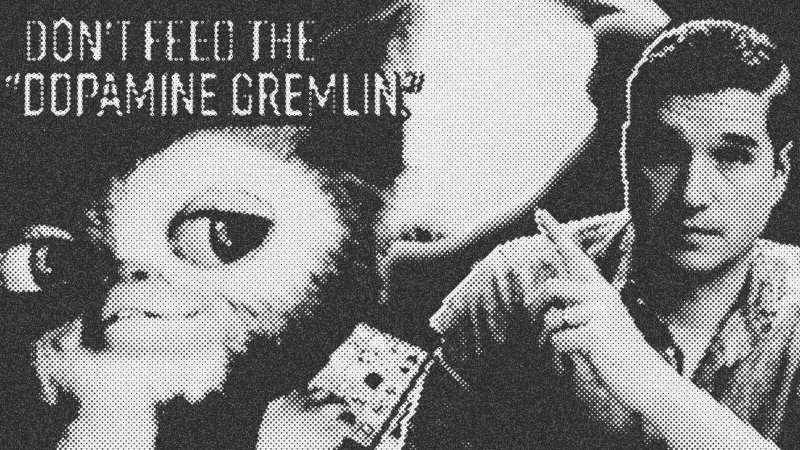
However, the brain does not allow this tilt to persist. Through a process called neuroadaptation, the brain immediately attempts to restore balance by downregulating its own dopamine production. This involves "gremlins" hopping onto the pain side of the teeter-totter to bring it level. Crucially, these gremlins do not hop off the moment the balance is restored; they stay on until it is tilted an equal and opposite amount toward pain. This manifests as the "come down," the craving for one more video, or the irritability felt when a device is taken away. When we continuously flood our brains with external dopamine sources, the gremlins become permanent residents on the pain side, leading to a chronic dopamine deficit state where we require the drug of choice just to feel normal.
The shift to diffuse internet addiction
We have moved past the era where addiction was confined to specific, identifiable substances or niches like pornography or gaming. Anna Lembke identifies a new phenomenon she calls diffuse internet addiction. This is a state where the individual is not necessarily hooked on a single app, but is continuously online, jumping between social media, online shopping, gambling, and streaming. The Pew Charitable Trusts recently found that roughly 50% of US teenagers report being continuously online. This constant engagement ensures that the brain never has the opportunity to reset its reward pathways, keeping the user in a state of permanent withdrawal when not actively consuming.
This crisis is largely contextual. We have "drugified" our environment, taking every human interaction and making it more accessible, novel, and potently reinforcing. The smartphone, introduced in 2007, acted as a portable hypodermic needle for a generation, delivering high-potency digital rewards 24/7. Whether the stimuli is a substance like fentanyl or a behavioral loop like Instagram reels, the pathophysiology remains identical. The more dopamine released and the faster the delivery, the more likely the brain is to develop a compulsive attachment.
Youth vulnerability and the 16-year-old threshold
Adolescents are uniquely susceptible to these mechanisms due to the high plasticity of their developing brains. Between the ages of zero and 25, the brain is pruning unused neurons and myelinating the pathways used most frequently. Patterns established during this period become neurologically "concretized." Teenagers are also biologically primed for social validation and peer reputation enhancement, which digital platforms exploit through likes, comments, and streaks. They naturally underestimate risk and overestimate immediate benefit, making them helpless against an algorithmic feed designed by the world's most sophisticated engineers.
Cal Newport and Anna Lembke suggest a radical departure from current parenting norms: a strict threshold of 16 years old for personal internet-connected devices. This includes not just smartphones, but iPads and smartwatches that prime kids for constant notifications. The goal is to allow the first 16 years of life to be focused on effortful, real-world social skills and physical movement before introducing a substance as potent as the mobile internet. Even at 16, the introduction must be tentative, as some children will discover that digital media is their specific "drug of choice," requiring far more aggressive guardrails than their peers.
Strategies for radical digital recovery
For those already struggling with the "four C's"—loss of control, compulsion, craving, and consequences—simple tips are rarely enough. Recovery requires self-binding strategies that do not rely on willpower alone. One such method is "landlining," where all family members plug their phones into a central kitchen hub upon entering the house, effectively treating the mobile device like a stationary landline. Others include going grayscale to reduce the visual potency of the screen or deleting search histories to disable the algorithmic feed, forcing the user to manually type in what they are looking for.
In cases of severe addiction, Anna Lembke points toward professional intervention and the rise of groups like Internet and Technology Addicts Anonymous (ITAA). These 12-step programs utilize the same principles as Alcoholics Anonymous, emphasizing daily meetings, outreach calls, and absolute abstention from "bottom-line" behaviors. The goal is to press the pause button between desire and consumption, allowing the brain's teeter-totter to finally return to a level state without the constant pressure of digital gremlins.
The hidden costs of the attention economy
The societal impact of this addiction extends beyond individual mental health into the "dissolution of the social compact." When we replace human connection with digital placeholders, we lose the ability to endure boredom or engage in the effortful tasks required for deep fulfillment. This is why Cal Newport advocates for a value-driven approach to technology rather than a total ban. Digital Minimalism suggests that we should only use tools that support our core values, and even then, we must put "tight fences" around that usage to prevent it from bleeding into every waking moment.
Legislative action is also becoming a necessity. Anna Lembke applauds initiatives like Australia's ban on social media for those under 16, noting that such laws provide parents with the "ammo" needed to resist social pressure. Other potential solutions include incentivizing schools to go "bell-to-bell" phone-free and creating "airplane Wi-Fi" bubbles in public spaces where internet connectivity is collectively disabled. We must treat these platforms as the potent substances they are, rather than neutral tools that have simply been misused. Only through a combination of individual discipline, community standards, and top-down policy can we hope to restore our collective cognitive autonomy.
- Anna Lembke
- 29%· people
- Cal Newport
- 12%· people
- Alcoholics Anonymous
- 6%· companies
- Australia
- 6%· places
- Digital Minimalism
- 6%· books
- Other topics
- 41%
How Do I Fix My Motivation System?
WatchCal Newport // 1:26:39

Cal Newport is a computer science professor at Georgetown University and is also a New York Times bestselling author of seven books, including, A World Without Email, Digital Minimalism, and Deep Work, which have been published in over 35 languages. In addition to his books, Cal is a regular contributor to the New Yorker, the New York Times, and WIRED, a frequent guest on NPR, and the host of the popular Deep Questions podcast. He also publishes articles at calnewport.com and has an email newsletter.