Brad Stulberg warns relentless metric tracking ruins peak performance
The Digital Mirage of Perfect Metrics
Modern digital technology promises total control over our daily lives. By clipping on a wearable device or opening a real-time dashboard, we can capture and analyze heart rate variability, sleep stages, daily steps, and minute-by-minute work output. This absolute quantification underpins our modern culture of endless self-improvement. It suggests that if we can measure a metric, we can optimize it, and if we optimize it, we will inevitably perform better and live happier lives.
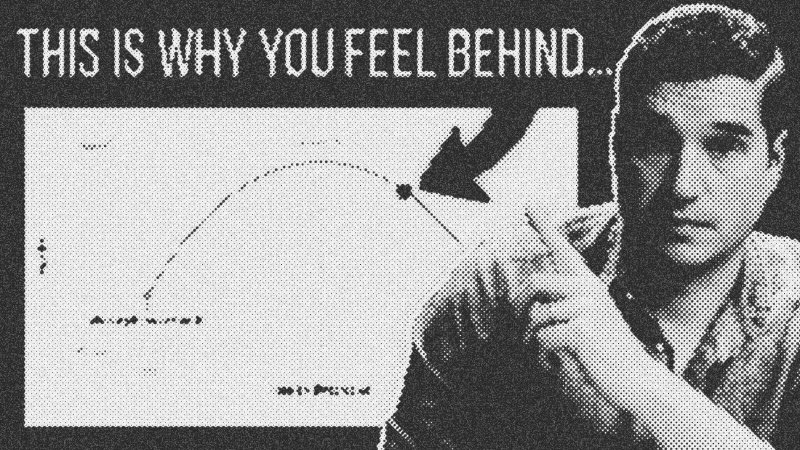
Yet, this relentless surveillance creates a profound psychological trap. Instead of cultivating excellence, our constant focus on metrics breeds deep anxiety. The systems we build to enhance our focus end up fracturing it. We turn our attention inward, transforming natural human activities into rigid optimization problems. When we reduce our well-being to a series of digital targets, we do not achieve peak performance. Instead, we trade raw presence and deep concentration for the fragile satisfaction of making a dashboard indicator go up.
Why We Obsess Over the Proxy
Our obsession with modern tracking tools stems from two distinct psychological drivers. First, these tools exploit a natural human desire for comparison and status. In an earlier era, we measured our social circles by physical gatherings and our health during annual doctor visits. Today, technology companies compress these long time scales into instantaneous feedback loops, turning basic human instincts into compulsive behavioral patterns.
Second, metrics offer a false sense of control in an increasingly unpredictable world. When external circumstances feel chaotic, focusing on a precise, self-contained target provides immediate anxiety relief. We focus on lead indicators because they are easy to control. Ticking off daily step counts or maintaining a specific blood glucose level feels like a concrete victory, even if it does nothing to address our larger, more complex challenges. This phenomenon mirrors a common pattern in knowledge work where individuals obsess over intricate systems and software configurations to avoid the difficult, creative labor that actually drives meaningful career advancement.
The High Cost of Real-Time Surveillance
Orthosomnia and the Anxiety Loop
Constant measurement introduces significant physical and psychological costs. In sleep medicine, researchers have identified a clinical condition known as orthosomnia. This term describes patients who become so intensely preoccupied with achieving a perfect algorithmic sleep score that the resulting anxiety causes the very insomnia they are trying to prevent. By focusing on the device instead of listening to their bodies, individuals disrupt their natural physiological rhythms.
This anxiety loop is not limited to sleep. In medicine and fitness, the ubiquity of over-the-counter tracking devices leads to frequent false positives, causing unnecessary anxiety and triggering medical interventions that carry their own inherent risks. When every minor physiological fluctuation is flagged as a potential threat, we lose our natural resilience and develop a hyper-fragile relationship with our health.
Majoring in the Minors
Over-tracking also causes us to overcomplicate our efforts, prioritizing minor details while neglecting fundamental principles. In professional sports, elite training facilities often look surprisingly low-tech. World-class hockey players, such as members of the Toronto Maple Leafs, do not spend their days weighing fruit or obsessing over algorithmic readiness scores. They focus on basic, high-impact fundamentals: hours of practice on the ice, hard work in the weight room, and adequate rest.
When we over-index on complex nutrition hacks or proprietary wearable metrics, we mistake complexity for progress. This superficial focus allows us to simulate achievement without enduring the strenuous, simple work required for actual excellence. We spend more time analyzing our metrics than performing the craft itself.
The Performance Solution: Right Metrics, Right Frequency
Implementing a Tracking Sprint
To break free from the optimization trap without abandoning self-improvement, we must change how we interact with data. Metrics are not inherently destructive, but they must serve as a temporary diagnostic tool rather than a permanent lifestyle. A targeted tracking sprint offers a practical way to gather actionable insights without developing a permanent obsession.
For example, a newly diagnosed diabetic might wear a continuous glucose monitor for several weeks to learn how specific foods affect their blood sugar. Once they understand those patterns, they can discard the device and rely on their newly established habits. Similarly, a creative professional might track their work hours or content metrics for a single week to identify hidden inefficiencies, then return to their creative flow without the constant distraction of a real-time dashboard.
Embracing Macro Optimization
Real mastery requires us to transition from tracking data to trusting our intuition. Highly successful performers operate on a broader cyclical pattern of exploration and exploitation. During brief exploration phases, they experiment with different tools, track various indicators, and seek expert coaching to build a foundation. Once they establish a working system, they transition to a multi-year exploitation phase where they silence the noise and focus purely on execution.
This long-term cycle keeps the main objective in focus. Rather than reacting to daily, algorithmic fluctuations, we should measure our progress at the widest possible intervals. If our long-term goals are on track, we do not need to monitor the daily noise. Simplifying our attention allows us to achieve deep concentration and step into a flow state.
Shifting Focus Back to the Arena
Peak performance and deep fulfillment require us to forget ourselves. As pioneering psychologists have long argued, the most profound experiences of flow and self-actualization are characterized by a total loss of ego and a deep connection with the task at hand. If we are constantly monitoring our wrist-worn devices or analyzing real-time performance graphs, we remain trapped in self-obsessed, analytical thinking.
True efficiency is not about collecting data; it is about building simple, sustainable systems that allow us to work with intense focus. We must define what constitutes "enough" based on our long-term vision of a good life, rather than working forward from endless, arbitrary targets. By choosing the right metrics, checking them at the lowest practical frequency, and aggressively simplifying our daily routines, we can escape the digital mirage and focus our energy on doing exceptional work in the real world.
- Aura Ring
- 10%· products
- Brad Stulberg
- 10%· people
- Cal Newport
- 10%· people
- LeBron James
- 10%· people
- Mihaly Csikszentmihalyi
- 10%· people
- Other topics
- 50%
The Optimization Paradox Explained
WatchCal Newport // 1:18:31

Cal Newport is a computer science professor at Georgetown University and is also a New York Times bestselling author of seven books, including, A World Without Email, Digital Minimalism, and Deep Work, which have been published in over 35 languages. In addition to his books, Cal is a regular contributor to the New Yorker, the New York Times, and WIRED, a frequent guest on NPR, and the host of the popular Deep Questions podcast. He also publishes articles at calnewport.com and has an email newsletter.