Cal Newport reveals how four distinct notebooks organize his entire working brain
Many people buy beautiful, expensive notebooks because of the aesthetic appeal and the anticipation of capturing original thoughts. Yet, most of those fancy notebooks end up sitting idle on a shelf, forgotten. The issue is simple: it is not enough to simply own a nice notebook. You need a specific, structured use for it that takes advantage of its analog format.
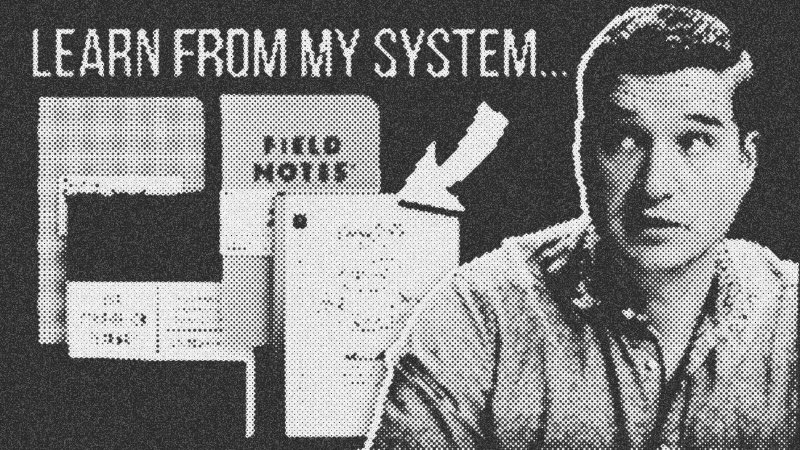
Cal Newport, computer science professor and author of Deep Work, runs his professional life through a highly intentional system of four distinct notebooks. Each tool serves a precise, non-overlapping cognitive purpose. By dissecting this exact four-notebook setup, you can learn how to structure your own planning, brainstorming, and thinking processes to build a workflow that actually lasts.
Use a lay-flat daily planner to structure your schedule
The first notebook in the stack is a dedicated daily planner. For this, Newport uses his own custom-designed product, The Time-Block Planner. The core activity here is time blocking—giving every minute of your workday a job. Rather than working reactively by responding to emails as they arrive, you map out your entire day in advance on paper.
While digital calendars are ubiquitous, paper provides distinct advantages for daily scheduling. Writing your plan by hand with a pen makes your day feel more intentional. It creates a physical record that exists outside your computer, allowing you to check your next task without entering the digital rabbit hole of distraction. When seeking a daily planner, look for two non-negotiable features: a sturdy double-spiral binding that allows the book to lie completely flat on your desk, and near full-size pages that give you enough space to write out detailed time blocks.
Draft multi-month strategic visions on a simulated paper tablet
For longer-term planning, professional projects, or personal endeavors that stretch over several months, Newport uses a digital notebook: the reMarkable Paper Pro. This is a specialized e-ink tablet rather than a standard glowing screen. Unlike an iPad or smartphone, it does not use a lit LCD or LED display. Instead, it relies on physical microscopic particles that turn in response to electrical currents, mimicking the reflective properties and tactile drag of real paper.
This format is ideal for multi-month projects because it allows you to easily draw shapes, map out diagrams, use color, and highlight key ideas without carrying a pencil case full of colored markers. Furthermore, because these devices are expensive, they carry a psychological weight. Writing a plan on a high-end device signals to your brain that the project is serious. Finally, because the pages back up to the cloud automatically, you never have to worry about losing a critical multi-month strategy in the bottom of a backpack.
Carry a pocket-sized notebook for single-purpose brainstorming
To make progress on complex, long-term problems, you need a highly portable tool dedicated to a single, thorny issue. For this, Newport relies on Field Notes notebooks. These are small, cheap, flexible, staple-bound pocket notebooks. You dedicate one entire notebook to a single question—such as refining a book concept, improving your health, or redesigning a business strategy.
Solving hard problems requires returning to them repeatedly over time, building an ongoing written dialogue with yourself. The pocket format is essential because you cannot force insights on a rigid schedule; you must be ready to write when inspiration strikes. Pocket-sized notebooks can slip into a jeans pocket, a jacket sleeve, or a small bag, making them far more versatile than thicker hard-bound books. Because they are cheap and bought in bulk, you do not have to be precious about your writing; you can scribble half-formed ideas without guilt.
Keep a cheap grid-lined notebook to extend your working memory
The fourth notebook is a classic, cheap, grid-lined composition notebook used exclusively for extending working memory in the moment. When working through complex mathematical proofs, technical systems, or analytical problems, your brain cannot hold all the variables at once. You need a scratchpad to write out equations, draw quick charts, and test ideas.
Unlike the single-purpose notebook, this scratchpad is completely non-archival. One page might contain math symbols from a research session, while the next has a diagram of a technical workflow. You do not need to preserve these pages; once a problem is solved, the final result is typed up digitally, and the paper is ignored. Newport recommends grid-lined pages over ruled lines because the grid allows you to easily align symbols, subscripts, and complicated diagrams. However, the brightness of the grid lines is crucial: if the grid is printed too dark, it clutters your vision, so look for notebooks with faint, light-blue grid patterns.
Troubleshooting the analog notebook habit
If you find yourself abandoning notebooks, the most common reason is a lack of specificity. You must never buy a nice notebook simply because it looks good in a museum gift shop; you must buy a notebook because you have an immediate, concrete need that requires that exact paper format.
Another common point of failure is being too precious with your handwriting. If you treat a notebook like an art project, you will feel too intimidated to use it for messy, everyday thinking. Keep your scratchpads cheap and your pocket notebooks disposable, reserving high-quality paper only for structured daily planning and permanent records. By matching the right physical format to the specific cognitive task, you turn paper from a dusty aesthetic object into a highly functional extension of your mind.
- Cal Newport
- 20%· people
- Deep Work
- 20%· books
- Field Notes
- 20%· products
- reMarkable Paper Pro
- 20%· products
- The Time-Block Planner
- 20%· products
How to Use Notebooks in 2026 (The Best System)
WatchCal Newport // 1:04:13

Cal Newport is a computer science professor at Georgetown University and is also a New York Times bestselling author of seven books, including, A World Without Email, Digital Minimalism, and Deep Work, which have been published in over 35 languages. In addition to his books, Cal is a regular contributor to the New Yorker, the New York Times, and WIRED, a frequent guest on NPR, and the host of the popular Deep Questions podcast. He also publishes articles at calnewport.com and has an email newsletter.