Newport warns TikTok and AI require a new digital minimalism
The Brainstem Race and the Death of the Town Square
When Digital Minimalism first hit bookstores in 2019, the relationship we had with our screens was fundamentally different. We were at the tail end of what seemed like a golden era of social media. Back then, we still viewed networks as inevitable tools of democratic empowerment. They were supposed to be the new, digital town squares. Fast forward to today, and that naive optimism has evaporated. The platforms of the late 2010s have devolved into an aggressive, algorithmically optimized race to the bottom of our brainstems.
Modern platforms do not care about connection. They copy the highly addictive, short-form mechanics of TikTok to keep eyeballs glued to the screen. Platforms like Twitter, now rebranded as X, have abandoned any illusion of serving the public good. Instead, they serve up a steady stream of highly volatile, low-value content designed solely to trigger outrage and engagement.
Meanwhile, generative AI threatens to co-opt the very moments we might otherwise reserve for original thought. The core question is no longer just how to manage screen time, but whether it is still possible to maintain cognitive autonomy. Remaining a digital minimalist requires a tactical evolution. The passive boundaries of the past are no longer sufficient to protect our attention.
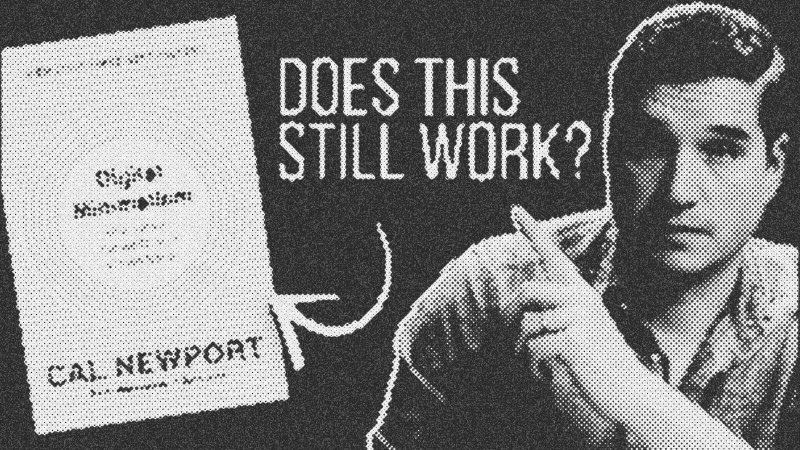
The Fallacy of White-Knuckle Willpower
Many well-meaning productivity enthusiasts attempt to solve screen addiction through sheer discipline. They set screen-time limits, put their phones in other rooms, or resolve not to check notifications until a certain hour. These strategies fail. Willpower is a finite resource. When you are tired, stressed, or mentally depleted, your short-term reward center wins the vote. If a highly stimulating device is within reach, you will eventually pick it up.
Data from the r/DigitalMinimalism subreddit highlights that successful practitioners are shifting away from willpower entirely. Instead of fighting their habits daily, they make high-friction design choices once.
For example, one user took the drastic step of using a physical lockbox to keep their phone inaccessible during the morning. By removing the ability to make a choice, they clawed back their focus. The choice was decided the night before. This aligns with a foundational productivity truth: systems beat willpower every single time. To reclaim your attention, you must design an environment where distraction is physically or logically impossible.
The Tactician Playbook: Simple Hacks for Deep Focus
To build a highly functional system, you can pull several actionable tactics from the frontlines of the digital minimalist community. Let us analyze three specific interventions that yield massive compounding returns.
The Landlining Method
Your smartphone is not your property; it is an attention-extraction tool that you pay to carry. To break its grip, treat your mobile device like a 1990s landline. When you return home, plug the phone into a charging station in the kitchen. It stays there.
If you need to send a message, look up a recipe, or take a call, you must stand in the kitchen to do it. This simple friction point destroys the habit of mindless, couch-bound scrolling. It forces your household to treat the device as a single-purpose utility rather than a constant appendage.
Human Taste Over Algorithmic Feeds
Algorithms are engineered to show you content that triggers a predictable reward response. This creates a highly homogenized, repetitive information ecosystem. To combat this, prioritize human curation over recommendation engines.
Seek out local newspapers, independent bookstores, and volunteer-run radio stations. Buy blind-date books wrapped in paper where you cannot see the cover. By following chains of human recommendations, you expose yourself to weird, unexpected, and high-value ideas that algorithms would never serve you. This builds webs of trust that ground your thinking in the real, non-flattened world.
Riding the Boredom Wave
Most people pick up their phones because they cannot tolerate a single moment of boredom. However, boredom is a natural sensory cue. Just as thirst signals a physical need for water, boredom signals a cognitive need for meaningful activity.
Sitting in silence for twenty minutes is a useful diagnostic experiment, but the ultimate goal should be to ride the boredom wave toward slow, deep pursuits. When the urge to scroll hits, direct that energy toward woodworking, reading a physical book, or going for a walk without headphones. This rewires your brain to seek deep satisfaction rather than cheap dopamine hits.
Unwinding the Dopamine Debt
If you find yourself constantly failing to implement these systems, it is vital to recognize that this is not a character flaw. Your brain has been rewired by highly sophisticated software engineering. As addiction expert Anna Lembke explains, high-stimulus digital environments downregulate your dopamine receptors. Over time, your baseline shifts, making normal, everyday activities feel incredibly dull. You require the hyper-stimulus of infinite scroll just to feel normal.
Breaking this cycle requires a period of structured detox. For many, this means a complete digital fast for thirty days to allow dopamine receptors to reset. If your addiction is severe, do not hesitate to seek professional help. Support groups modeled after traditional substance recovery programs are growing rapidly. Admitting that your attention has been compromised is the first step toward reclaiming it.
The Artificial Intelligence Hazard
Generative AI presents a brand-new threat to cognitive fitness. The danger is not just job displacement; it is the outsourcing of original thought. Writing is a highly demanding, often painful cognitive exercise. That friction is precisely why it is valuable. Just as your muscles need the resistance of weights to grow stronger, your mind needs the strain of organizing complex thoughts on a blank page.
Avoid the temptation to let machines do your writing or thinking. Relying on AI to generate your prose is a form of cognitive evasion. It is the mental equivalent of taking an escalator instead of the stairs.
Furthermore, engaging in long, conversational relationships with chatbots is a form of emotional fraud. Your brain naturally simulates another mind on the receiving end of those conversations, yet no mind exists. Treat AI as a highly narrow, specialized utility for specific technical tasks, not as a general partner in your intellectual or emotional life.
Design a Life Your Smartphone Jealous Of
Ultimately, digital minimalism is not a philosophy of restriction. It is a philosophy of cultivation. You are not giving up technology; you are freeing up space to build something significantly better. The goal of a deep life is simple: to live in a way that makes your smartphone jealous.
Fill your days with physical craft, deep relationships, structured solitude, and intellectual challenge. When your real-world landscape is rich and rewarding, the pull of the screen naturally fades. Stop negotiating with notifications. Design a system that protects your mind, and let the algorithms starve.
- Anna Lembke
- 25%· people
- Cal Newport
- 25%· people
- Digital Minimalism
- 25%· books
- r/DigitalMinimalism
- 25%· products
How to Be a Digital Minimalist in 2026
WatchCal Newport // 59:49

Cal Newport is a computer science professor at Georgetown University and is also a New York Times bestselling author of seven books, including, A World Without Email, Digital Minimalism, and Deep Work, which have been published in over 35 languages. In addition to his books, Cal is a regular contributor to the New Yorker, the New York Times, and WIRED, a frequent guest on NPR, and the host of the popular Deep Questions podcast. He also publishes articles at calnewport.com and has an email newsletter.