Cal Newport warns AI companies are manipulating our collective mental health
The early days of generative AI brought genuine curiosity and excitement. When ChatGPT first arrived, its ability to parse and produce structured language felt like magic. But the discourse shifted almost instantly. Tech commentators and industry giants quickly cloaked the technology in a mantle of existential dread. This strategic pivot to panic represents a new, darker playbook for tech rollouts. It is a communication strategy designed to unnerve, rather than inform, the public.
The Anatomy of "Doom Trolling"
Silicon Valley has developed an arresting public relations tactic. Major artificial intelligence players solemnly catalog the grim futures their products might create, shrug their shoulders, and then return to building those exact systems. This behavior resembles a cat dropping a dead bird at your doorstep before casually trotting back outside. Let us call this strategy doom trolling. It is the defining property of our current technological moment.
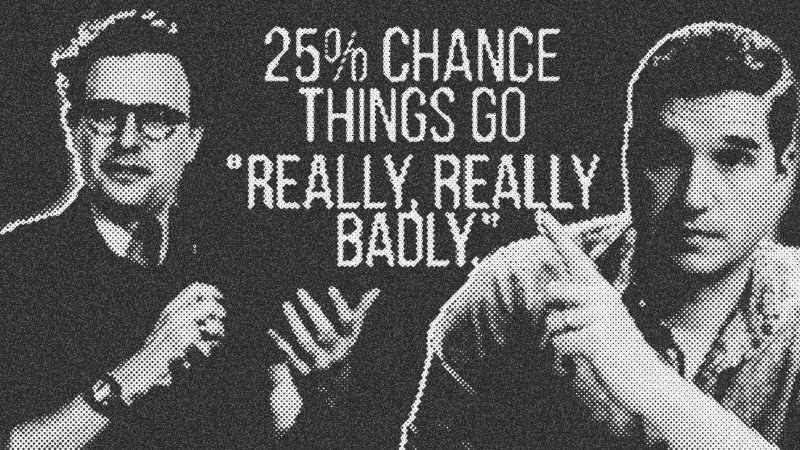
Sam Altman of OpenAI regularly signs warnings comparing AI extinction risks to nuclear war while simultaneously raising billions to accelerate development. Similarly, Dario Amodei of Anthropic publicly floats a 25 percent chance that our digital future ends in human extinction. This constant loop of performative hand-wringing followed by rapid product deployments is not just confusing. It is morally indefensible.
The Two Paths of Corporate Intent
When evaluating doom trolling, only two logical conclusions emerge regarding the true intentions of these corporations. Both options are deeply troubling.
The Sincere Believer Scenario
If corporate leaders genuinely believe their creations carry a non-trivial chance of wiping out humanity or permanently breaking the global economy, their moral duty is absolute. Every reasonable ethical framework dictates that they must immediately halt development. Continuing to build a technology you believe could destroy civilization while merely publishing somber white papers is monstrous.
The Cynical Marketing Playbook
If they do not actually believe these risks are imminent, then their behavior is purely cynical. They might use calculated dread to inflate valuations before initial public offerings. Others use it to recruit developers steeped in Silicon Valley's singular "doomer" culture. Venture capitalists also warn that companies use this panic to achieve regulatory capture, building high compliance walls to block smaller, scrappier competitors. This option means tech giants are actively laundering the anxiety of millions of people to enrich a tiny pool of stockholders.
Reclaiming Agency From the Hype Cycle
We do not have to accept this psychological tax. The public can actively push back against the doom trolling ecosystem by changing how they consume tech news.
First, ignore predictions stated in the future tense. Focus exclusively on what these products can do right now and evaluate whether they deliver actual utility for their cost. Most media reports simply echo the dark, self-serving vibes broadcast by the companies themselves. Second, remember that Silicon Valley is driven by a highly insular, quasi-religious culture that is far less objective than it appears. These companies operate as money-losing natural language engines and software utilities. They do not possess all-powerful, demon-summoning superintelligence.
- Anthropic
- 17%· companies
- Cal Newport
- 17%· people
- ChatGPT
- 17%· products
- Dario Amodei
- 17%· people
- OpenAI
- 17%· companies
- Sam Altman
- 17%· people
Dear AI Companies: Stop the “Doom Trolling”
WatchCal Newport // 22:05

Cal Newport is a computer science professor at Georgetown University and is also a New York Times bestselling author of seven books, including, A World Without Email, Digital Minimalism, and Deep Work, which have been published in over 35 languages. In addition to his books, Cal is a regular contributor to the New Yorker, the New York Times, and WIRED, a frequent guest on NPR, and the host of the popular Deep Questions podcast. He also publishes articles at calnewport.com and has an email newsletter.