Cal Newport reviews five books on AI threats and cinematic history
Reading systems beat heroic efforts
Consistency in intellectual intake isn't a matter of willpower; it’s a matter of infrastructure. To maintain a five-book-per-month pace, you must ruthlessly eliminate the default habit of reaching for your phone. By carving out specific morning and evening windows, and even Time-Blocking sessions for the home stretch of a manuscript, you transform reading from a leisure activity into a core professional system. This disciplined approach ensures that high-quality ideas constantly circulate through your workflow, preventing the mental stagnation that occurs when energy is wasted on low-value digital distractions.
Existential risks and the AI determinism
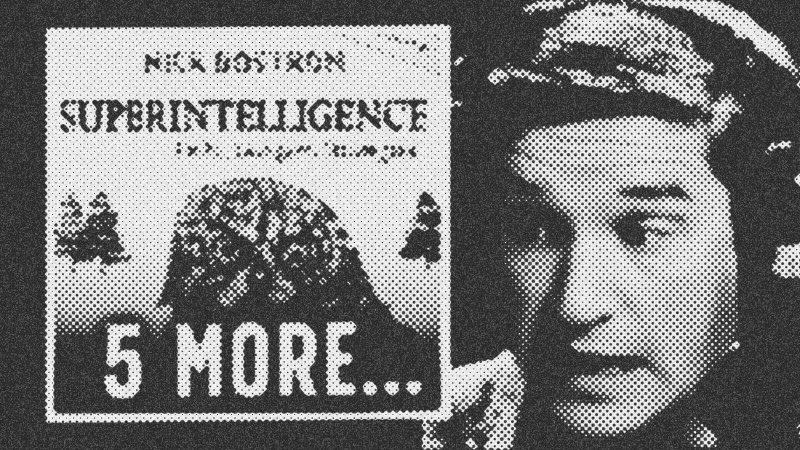
Nick Bostrom and Max Tegmark represent a specific brand of techno-libertarian thought that views humanity’s expansion into the cosmos as an inevitability. In Superintelligence: Paths, Dangers, Strategies, Bostrom treats artificial intelligence as a potential "great filter" that could either fuel our ascent or convert the planet into raw matter for computation. This mindset assumes the "whole ball game" for humanity is becoming a multi-solar system species. While Life 3.0: Being Human in the Age of Artificial Intelligence offers a more energetic exploration of these themes, both authors emphasize that we are currently in a critical window where our design choices will dictate the next million years of intelligent life.
The failure of academic caveats
Modern non-fiction often suffers from an epidemic of "caveating." In Life is Hard: How Philosophy Can Help Us Find Our Way, Kieran Setiya offers profound philosophical insights into navigating loss by focusing on what remains possible. However, the work is frequently interrupted by self-defensive interjections aimed at appeasing academic critics. This "wokeness" signals to a narrow contemporary audience but sacrifices the timelessness of the philosophical arguments. Effective writing requires trusting the reader to apply insights to their own context. When an author attempts to preempt every possible critique, they diminish the raw impact of their primary thesis.
Tarantino and the power of intellectual confidence
Cinema Speculation by Quentin Tarantino stands out because it rejects the sanitized, formal tone of typical idea-driven non-fiction. Tarantino writes with a fire-hose energy, moving through 1970s film history with deep intellectual confidence. He doesn't perform intelligence; he inhabits it. This work demonstrates that originality in tone is as vital as the ideas themselves. By avoiding the "professor voice" that plagues most serious writing, Tarantino creates a high-density learning experience that feels like an urgent conversation rather than a dry lecture.
- Artificial Intelligence
- 6%· concepts
- Bill Gates
- 6%· people
- Cal Newport
- 6%· people
- Cinema Speculation
- 6%· books
- Elon Musk
- 6%· people
- Other topics
- 71%
The Books I Read In November 2022
WatchCal Newport // 15:58

Cal Newport is a computer science professor at Georgetown University and is also a New York Times bestselling author of seven books, including, A World Without Email, Digital Minimalism, and Deep Work, which have been published in over 35 languages. In addition to his books, Cal is a regular contributor to the New Yorker, the New York Times, and WIRED, a frequent guest on NPR, and the host of the popular Deep Questions podcast. He also publishes articles at calnewport.com and has an email newsletter.