The Darkness Within: Three Disturbing Cases of Teenage Violence and Deception
The teenage years typically represent a chaotic intersection of identity formation and rebellion. For most, this manifests as slammed doors, questionable fashion choices, or a stubborn insistence on independence. However, some individuals cross a line where angst transforms into something far more predatory and lethal. Understanding the psychological catalysts behind adolescent violence requires looking past the shocking headlines to the systemic failures, mental health crises, and toxic fantasies that fuel these tragedies. We are exploring three distinct cases that serve as sobering reminders of how easily youthful impressionability can spiral into irreparable destruction.
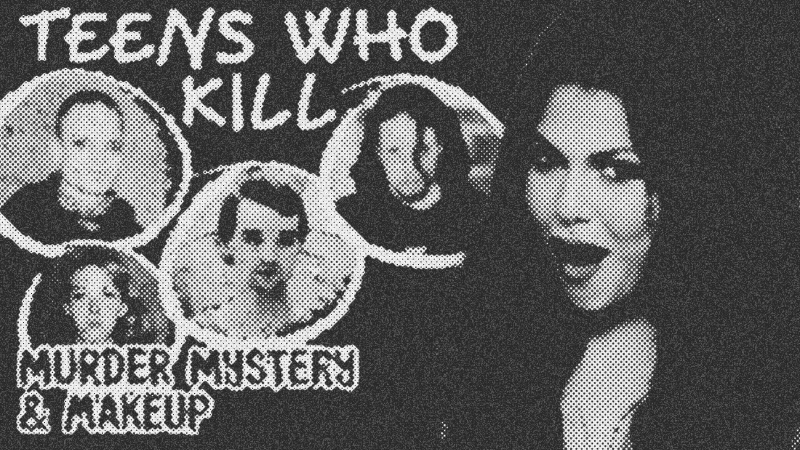
1. The Vampire Clan: Rituals and Bloodshed
In the mid-nineties, a fascination with the occult and tabletop gaming took a horrific turn in the case of Rod Ferrell. At just sixteen years old, Ferrell led a group of misfits who believed they were literal vampires, engaging in blood-drinking rituals and identifying with a fantasy world that prioritized the "kill or be killed" mentality. This was not merely a case of a teenager playing a role; it was the collision of a traumatic upbringing and a profound disconnection from reality. Ferrell, who claimed to be a 500-year-old vampire named Vesago, was born into a cycle of abuse. His mother, Sondra Ferrell, was a teenager herself when he was born, and Rod later reported horrific sexual abuse at the hands of his grandfather.
This background created a vacuum filled by the role-playing game Vampire: The Masquerade. While millions play such games without incident, Ferrell utilized the lore to build a cult of personality. He recruited other troubled youths, including Howard Anderson, Charity Keesee, and Dana Cooper, promising them a sense of belonging and power. The group’s descent into violence peaked during a road trip from Kentucky to Florida, intended to "rescue" another teen, Heather Wendorf. The mission culminated in the brutal crowbar murders of Heather’s parents, Richard and Naomi Wendorf. Ferrell’s lack of remorse was chilling; he viewed the killings as a "way of life," even tattooing a cult symbol onto the victim's chest. This case highlights the dangerous synergy between untreated childhood trauma and the radicalization of fantasy.
2. Alan Hruby: The High Price of Entitlement
While some killers are born from neglect, others emerge from a vacuum of accountability. Alan Hruby was the quintessential "spoiled brat" whose obsession with an extravagant lifestyle led him to execute his entire family. Living in a wealthy neighborhood in Duncan, Oklahoma, the Hruby family—led by publisher John Hruby and his wife Joy Hruby—appeared to be the pillar of the community. However, beneath the surface, Alan was a pathological liar and a serial fraudster. He spent thousands of dollars on European vacations and luxury goods by stealing his grandmother's identity and forging checks.
When his parents finally attempted to impose financial consequences, Alan did not reflect on his behavior; he calculated the cost of their lives. He realized that by eliminating his parents and his younger sister, Catherine Hruby, he would become the sole heir to the family estate. In October 2014, Alan stole his father's 9mm pistol and methodically murdered his mother and sister before waiting an hour for his father to return home so he could finish the job. The chilling detail of his behavior following the murders—attending a college football party and tweeting photos of a luxury hotel room—revealed a person completely devoid of empathy. His motivation was as shallow as it was horrifying: he needed to pay off a $3,000 debt to a loan shark and wanted to continue his #expensive lifestyle. This case serves as a terrifying example of how narcissism, when left unchecked by meaningful consequences, can evolve into psychopathy.
3. Jasmine Richardson: The 12-Year-Old Mastermind
The most shocking case involves the youngest convicted multiple killer in Canadian history. Jasmine Richardson was only twelve years old when she and her 23-year-old boyfriend, Jeremy Steinke, murdered her parents and her eight-year-old brother, Jacob Richardson. Jasmine’s transition from a "good girl" at a Catholic school to a goth-identified rebel happened with startling speed after meeting Steinke, who claimed to be a 300-year-old werewolf. The power dynamic was predatory, yet Jasmine was no passive participant. Jailhouse letters and digital footprints revealed that Jasmine was the primary instigator, expressing a desire to "slit the throats" of her parents because they disapproved of her relationship with an older man.
The brutality of the crime—specifically the murder of eight-year-old Jacob—stunned the nation of Canada. Jasmine herself inflicted the wounds on her brother, later slitting his throat to ensure his death. Because of the Youth Criminal Justice Act, Jasmine could only be sentenced to ten years, much of which was spent in a psychiatric facility focused on rehabilitation. She was released fully at age 23, her record expunged, sparking an intense debate about the efficacy of a justice system that prioritizes the rehabilitation of a child who committed such an adult act of evil. While Steinke remains in prison, Jasmine has effectively vanished into a new identity, leaving behind a legacy of unanswered questions about the nature of evil in children.
4. The Anatomy of Adolescent Rage
Examining these cases collectively reveals a disturbing pattern of how internal rage finds a target. In Rod Ferrell’s case, the rage was born of survival, a reaction to a world that had offered him nothing but pain. For Alan Hruby, the rage was a byproduct of frustrated entitlement, a temper tantrum that escalated into a triple homicide. For Jasmine Richardson, it was a toxic cocktail of adolescent rebellion and the influence of a predatory older partner who validated her worst impulses. None of these teenagers "snapped" in a vacuum; there were precursors—stolen cars, animal cruelty, assault, and digital manifestos—that were either dismissed as phases or inadequately addressed by the systems meant to protect and discipline.
5. The Role of Digital and Fantasy Worlds
In both Ferrell's and Richardson’s cases, fantasy worlds played a pivotal role in dehumanizing their victims. By adopting the personas of vampires and werewolves, they moved the moral goalposts of their reality. Digital platforms like MySpace and vampirefreaks.com provided a feedback loop where their radicalized thoughts were praised rather than challenged. In these spaces, they weren't troubled children; they were "legends" and "immortals." This psychological insulation allowed them to view the murder of their own family members not as an atrocity, but as a necessary ritual or a cinematic escape. This underscores the importance of monitoring the digital environments where impressionable minds seek validation.
6. Reflections on Justice and Recovery
The legal outcomes of these cases vary wildly, reflecting the different philosophies of justice in the US and Canada. Rod Ferrell initially faced the electric chair before his sentence was commuted to life. Alan Hruby will die in prison, a fate he arguably sought in his own bizarre, self-pitying letters to the media. Jasmine Richardson, however, is a free woman. This disparity raises the question: can someone who commits a triple murder at twelve ever truly be rehabilitated? While her records are expunged and she has successfully avoided further legal trouble, the families left behind—the sisters, grandparents, and neighbors—continue to serve a life sentence of grief. Justice, in these instances, remains an elusive concept, as no sentence can truly balance the scales for the lives lost to such senseless violence.
These stories serve as a warning. They remind us that the distance between a troubled teenager and a killer is often bridged by a lack of intervention, a fascination with the dark, and a devastating lack of empathy. By studying these cases, we invite ourselves to look closer at the young people in our lives, ensuring that their rebellion remains a phase and never becomes a tragedy. If you or someone you know is struggling with thoughts of violence or intense trauma, reaching out for professional help is the only way to break the cycle before it begins.
- Alan Hruby
- 6%· people
- Catherine Hruby
- 6%· people
- Charity Keesee
- 6%· people
- Dana Cooper
- 6%· people
- Heather Wendorf
- 6%· people
- Other topics
- 71%
When Teen Angst Leads to Deadly Decisions…. 3 Disturbing Cases of Teen Killers
WatchBailey Sarian // 2:00:27

Hi my name is Bailey Sarian and I am here to talk about History, True Crime & Makeup. Yes its an odd combination, but I am a curious cat myself and love learning. Im here to share stories, gain knowledge, enjoy makeup, and tell stories. Hope you have a good day and make good choices xo ☆ M Y S O C i A L S H E R E : https://linktr.ee/baileysarian ♡