Resurrecting Betty: The 1.9 PD Diesel Swap That Saved a T25 Transporter
The garage floor is usually where dreams and budgets go to die, especially when you’re dealing with forty-year-old German steel. Two years ago, the journey began with a simple mission: find a usable, tax-exempt classic for under £3,000. While others chased lightweight thrills in Minis and Spitfires, the focus shifted to a VW T25 Transporter named Betty. She was a bright yellow diamond in the rough, but like every project van, the deeper you cut, the more you find. What started as a hunt for a practical classic evolved into a multi-year odyssey involving heavy fabrication and a complete mechanical heart transplant.
The Anatomy of a Total Restoration
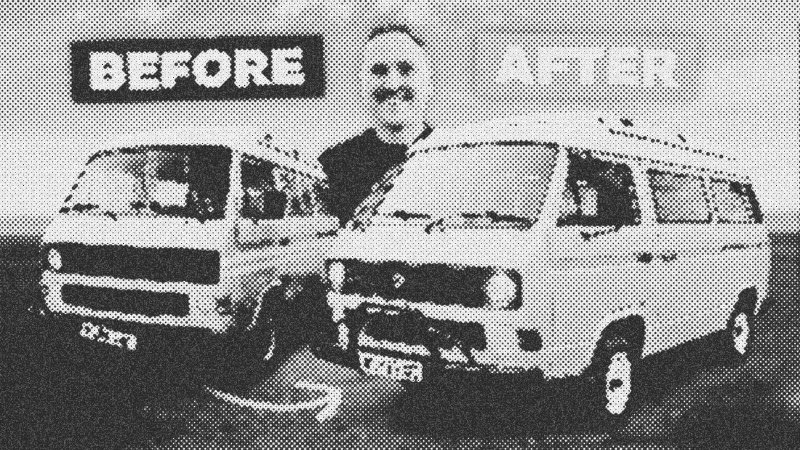
When Yorkshire Car Restoration took Betty in, they didn’t just patch holes; they performed surgery. A classic van like the T25 is notorious for rot in the window surrounds and floor pans. Over twelve months, the team stripped her to a bare shell, cutting out decades of oxidation and hand-fabricating new sections to ensure structural integrity. This wasn't a quick spray-over. It was a commitment to the chassis that laid the foundation for everything else. Once the metal was solid, she received a fresh coat of Liquid Yellow, transforming her from a tired workhorse into a visual standout that looks better than the day she left the factory in Germany.
Engineering the 1.9 PD Heart Transplant
Precision is everything under the hood, and the original engine in Betty was, frankly, a boat anchor. For a vehicle of this weight, the factory powerplants are lackluster and borderline dangerous in modern traffic. To solve this, Slaughterhouse Customs executed a 1.9 PD TDI engine swap. This isn't just any diesel; the PD130 from the Volkswagen Golf is legendary for its reliability, torque, and efficiency.
Integrating this modern mill into a classic chassis requires more than just mounting bolts. The team at Slaughterhouse Customs fabricated custom sumps, intake manifolds, and a stainless steel exhaust system in-house. They even engineered a custom loom and a hybrid electronic-to-cable throttle system using a custom-made potentiometer. To protect the original four-speed manual gearbox, they applied a custom engine map that softens the torque delivery. The result is an engine bay that looks like a work of art, finished with orange paint—a signature of the shop—and bolts that are meticulously torque-marked for quality assurance.
A Bespoke Basecamp on Wheels
Turning a van into a usable classic means the interior has to match the mechanical excellence. The transition from a hollow metal box to a premium camper involved a Westfalia-style conversion. Every inch was considered, from the 200-amp hour lithium leisure battery tucked under the seat to the Webasto diesel heater that ensures year-round usability. The craftsmanship is evident in the lightweight ply cabinetry and the rock-and-roll bed that transforms the living space in seconds.
What makes this build special is the homage to its history. The team reupholstered the original seats using Betty’s vintage material, blending modern functionality with period-correct aesthetics. With a compressor fridge, a Dometic sink and cooker combo, and even a pop-top roof for extra headroom, the van moved from a project to a legitimate off-grid capable family cruiser. It’s no longer just a classic; it’s a bespoke tool for adventure.
The Reality of the Wrench: Wheel Woes and Speedo Gaps
No build is ever truly finished without a fight. The plan to fit larger, rugged 15-inch alloy wheels hit an immediate roadblock: engineering clearances. Classic VW hubs aren't always friendly to modern offsets. The front wheels refused to seat properly, hitting the hub caps and preventing the center caps from locking in. This is where garage-floor problem-solving takes over.
During the struggle, a technical wager emerged regarding the speedometer. In a design quirk that baffled the uninitiated, the T25’s speedo cable actually attaches directly to the front wheel hub to measure speed. While it seems archaic compared to modern transmission-speed sensors, it’s a testament to the simple, mechanical engineering of the era. The wheel fitment issue remains a task for the dremel and spacers, proving that even a "finished" restoration always has one more job on the list.
The Final Verdict: Torque and Tradition
Taking Betty on her first real test drive revealed the true reward of the 1.9 PD swap. The torque is transformative. Instead of a labored slog through gears, the van now has "beans" in third gear and can comfortably maintain 70 mph on the motorway. It’s loud, it’s mechanical, and it requires a man’s effort to steer without power assistance, but that’s the soul of a classic.
Reflecting on the journey, the lesson is clear: respect the engineering but don't be afraid to improve it. By combining the soul of a 1980s Transporter with the bulletproof reliability of a PD diesel, you create something that can be cherished forever. The project ended with the surprise reveal of an Austin Allegro for a friend—a car with its own set of smoking engine problems—reminding us that in the world of car restoration, the next challenge is always just one breakdown away.
- 1.9 PD TDI
- 7%· products
- Alex
- 7%· people
- Austin Allegro
- 7%· products
- Ben
- 7%· people
- Car Vertical
- 7%· companies
- Other topics
- 64%
My VW Campervan Now Has The WORLD'S GREATEST Diesel Engine!
WatchAutoalex Cars // 40:07
