Why cheap German V8 restorations will always break your heart
The brutal reality of cheap classic V8 projects
There is a specific brand of madness that drives people to buy cheap, neglected, high-end German pillarless coupes and roadsters from the 1980s and '90s. On paper, it is a glorious vision: you rescue a classic BMW 8 Series or a Mercedes SL560 from obscurity, apply some elbow grease, fit some high-grade suspension and wheels, and drive off into the sunset. Under the hood, however, engineering reality always catches up. When you are dealing with sophisticated machinery, every shortcut comes back to haunt you, and "simple" modifications quickly spiral into major fabrication tasks.
This is a hands-on mechanical debrief on what it actually takes to execute a custom suspension retrofit, wheel optimization, and initial engine diagnostics on two distinct eras of German engineering: a 1995 BMW 840Ci (E31) and a late-1980s Mercedes SL560 (R107). While both projects ended up looking jaw-dropping on their new stanced footprints, their mechanical journeys expose the hard truths of classic car restoration.
Curing the lumpy idle on BMW’s M62 V8
The BMW 840Ci arrived back from Walter Moby Crash Repair wearing a fresh coat of rare Barbados Green paint. But a flawless exterior means nothing if the engine sounds like a washing machine full of spanners. The M62B40 V8 engine under the hood was running rough, exhibiting a lumpy idle and backfiring through the exhaust. This is a classic symptom of unburnt fuel exiting the cylinder head and igniting in the hot exhaust pipes—meaning we had a clear ignition failure on one or more cylinders.
To address this, we executed a top-end refresh using a fresh set of ignition coils and spark plugs. On these BMW V8s, the ignition coil packs sit directly in the middle of the cam covers. This design means that if your cam cover gaskets are leaking—which they almost always do on aging German aluminum heads—engine oil will pool inside the spark plug wells, drowning the boots and causing ignition breakdown.
Before installing the new coils, we removed the aging cam covers to replace the hardened, crusty gaskets with fresh, pliable units. When these gaskets age, they turn brittle, crack, and fail to seal, dripping oil directly onto the hot exhaust manifolds and causing unpleasant cabin smoke. With the spark plug wells cleaned of oil, new plugs threaded in, and fresh coils installed, the M62 immediately ran crisper and happier, though the lingering presence of decades-old fuel in the tank meant a complete system flush would still be required.
Welding custom struts for an E31 air ride retrofit
Fitting an air suspension kit from Seika on a classic BMW 8 Series is not a simple, bolt-on affair. Unlike modern vehicles or even later chassis like the E39, which utilize slip-in, clamp-style front struts, the E31 shares its front suspension architecture with the older E30 and E24. The strut casing is permanently welded directly to the front hub assembly. To install a custom adjustable air strut, you must perform surgery.
First, we stripped the front hub assembly down entirely. This involved removing the brake caliper, pulling the crusty old brake discs, and carefully removing the wheel bearing and the backing dust shields (which were thoroughly corroded). To avoid destroying the lower control arm ball joint boots, we unbolted the steering arm assembly from the bottom of the strut casing rather than separating the ball joints themselves.
With the strut assembly secured on the bench, we used a spring compressor to remove the old coil spring and unscrewed the large retaining gland nut at the top of the tube. This allowed us to slide the damper insert out of the sleeve. The oil found inside this sleeve is not actually a sign of a blown shock; it is a cooling oil bath designed by BMW to transfer heat from the damper insert to the outer strut casing. After draining the oil and cleaning the metal, we precisely measured and cut the structural steel strut tube using an angle grinder, leaving just enough tube to slide the new threaded Seika strut casing over. We chamfered the mating edges of both the cut hub tube and the new sleeve to allow for deep weld penetration, then had the assemblies professionally MIG-welded to guarantee structural integrity under load.
Routing lines and packaging the air management system
While the welded front struts dried, work turned to the rear. The rear suspension on the E31 is far more straightforward: a single lower shock bolt and two top mount nuts inside the boot. Once the dampers were unbolted, we used a pry bar to ease the rear control arms down and popped out the heavy OEM coil springs. The Seika rear airbags slotted directly into the spring seats, secured with a bottom stud running through the control arm to prevent the bag from shifting or dislodging when fully aired out.
Managing air suspension lines requires meticulous planning to prevent rubbing and eventual pressure failure. We drilled four small holes through an existing structural rubber grommet in the spare wheel well, avoiding any drilling into the metal body panels of the car. We routed the lines from the trunk along the factory wiring harnesses and hard brake lines, using heavy-duty cable ties to keep them clear of the moving suspension components and the rear subframe.
For the air management system, we built a custom mounting board. We found a sheet of rigid plastic in the yard, cut it to match the contours of the trunk floor under the carpet, and bolted the air tank and compressor directly to it. This added essential structural rigidity to the trunk floor, preventing the heavy compressor from vibrating or damaging the sheet metal. The air manifold was mounted nearby, and the main power lines were routed cleanly to the battery, which is conveniently located in the trunk on these cars.
Taming the wallowy Mercedes R107 chassis
Switching focus to the other German icon in the shop, the Mercedes SL560 (R107), the goal was to eliminate its floating, wallowy ride quality. The SL560 is a classic cruiser, but its factory suspension makes it feel more like a yacht than a sports car. To tighten up its road manners, we installed high-performance Koni adjustable dampers, Eibach lowering springs, and thicker anti-roll bars provided by the specialists at the SL Shop.
Disassembling the R107 suspension system is a masterclass in heavy-duty engineering. The rear springs on these cars are massive—thick, high-tension coils that feel like they belong on a commercial truck. With the dampers disconnected, we had to carefully lower the rear trailing arm under immense spring tension. The old dampers we pulled out were completely shot; the bump stops had disintegrated into dust and stuck to the leaking damper oil coating the shock bodies.
Installing the new setup required assembling the specialized SL Shop height adjusters with the new Eibach springs. These adjusters feature massive, beautifully machined threaded collars that sit on top of the springs, allowing for fine-tuned ride height adjustments. Once the springs and Koni dampers were bolted in, we tackled the front anti-roll bar, which proved to be an incredibly tight, frustrating fit. Aligning the stiff bushings and new links required multiple sets of hands and heavy leverage bars, but once bolted up, it promised to drastically flatline the car’s cornering attitude.
The bittersweet reward of old metal
After mounting a pristine set of 18-inch AC Schnitzer split wheels on the BMW (using specialized slim metal bolt-in valves to clear the narrow barrel holes) and 16-inch resto-mod wheels on the Mercedes, we finally dropped both cars to the ground.
The stance on both vehicles was nothing short of spectacular. The E31, tucked low over its massive rear 10J wheels, looked incredibly aggressive. The air ride system operated flawlessly, raising the car to a usable driving height and dumping it low enough to nestle the tires inside the arches with millimetric clearance from the front struts. The Mercedes SL560 sat squarely on its wider footprint, looking lower, meaner, and far more modern while retaining its classic OEM-plus prestige.
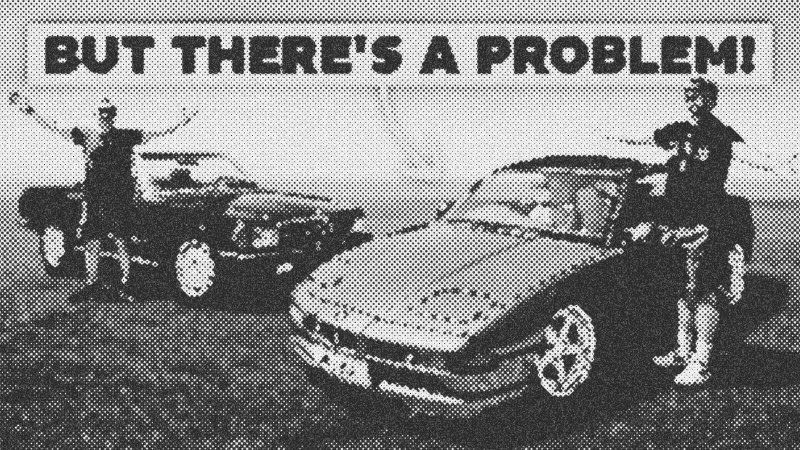
But as any experienced mechanic knows, old cars always get the last laugh. No sooner had we stepped back to admire our work than reality set in. While checking the fluids on the BMW 840Ci, we pulled the oil sump plug and drained what can only be described as a caramel frappuccino. The oil and coolant had thoroughly emulsified, pointing directly to a blown head gasket or a cracked block on the M62 V8. Meanwhile, the Mercedes, coping with high summer garage temperatures, began to rapidly overheat, indicating a major failure or blockage in its cooling system.
The lesson here is simple: custom wheels and air suspension are satisfying modifications, but they are only the top layer of a very deep, often painful mechanical journey. Respect the engineering, expect the setbacks, and never underestimate the capacity of an old German V8 to empty your wallet.
- Mercedes SL560
- 27%· products
- BMW 8 Series
- 18%· products
- BMW 840Ci
- 18%· products
- SL Shop
- 18%· companies
- AC Schnitzer
- 9%· companies
- Koni
- 9%· companies
We FINISHED Our Classic V8 Builds!
WatchAutoalex Cars // 1:01:06
