Echoes of Innovation: Unveiling the Modern Scriptorium Through AI-Powered Content Creation
The human endeavor to document and disseminate knowledge has evolved profoundly across millennia, from cuneiform tablets to illuminated manuscripts. Each epoch introduces tools that redefine the boundaries of expression and efficiency. Today, we stand at a similar precipice, observing the rapid ascent of artificial intelligence in the realm of content creation. This technological wave promises to alleviate the more laborious facets of digital communication, enabling creators to focus on the nuanced art of storytelling. This exploration delves into a selection of contemporary AI-driven platforms, examining how they streamline the creative process, thereby echoing the historical shifts that have consistently shaped our methods of information exchange.
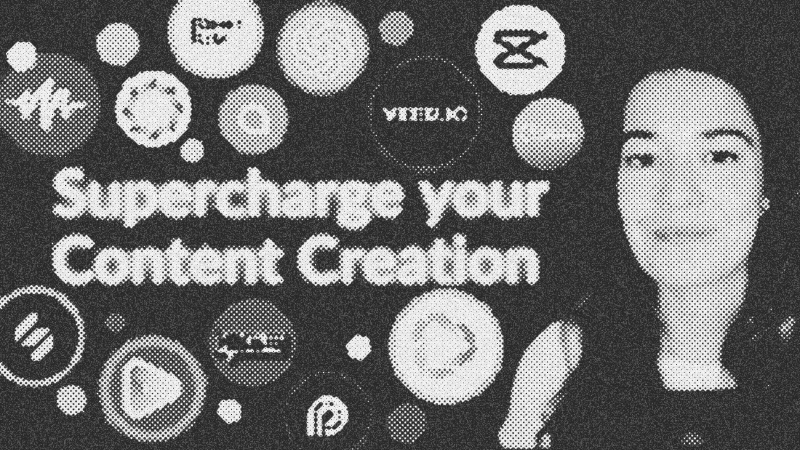
The Architectures of Modern Digital Craftsmanship
-
Conceptualizing the Narrative Arc: ChatGPT In ancient academies, the generation of ideas and the initial drafting of discourse were intellectual pursuits demanding considerable human effort. Today, platforms such as ChatGPT offer a preliminary scaffolding for thought. This generative AI assists in brainstorming concepts within specific domains, formulating compelling titles, and even constructing initial script drafts. It serves as a digital amanuensis, accelerating the foundational stages of content development and allowing the creator to refine rather than invent from absolute void.
-
The Voice of the Digital Oracle: Eleven Labs The spoken word has always been a potent medium, and its digital replication reaches new sophisticated heights with tools like Eleven Labs. This text-to-speech generator transcends simple vocalization, supporting a multitude of global languages from the historically rich Russian to the intricate Indonesian and Turkish. A particularly noteworthy advancement is its speech-to-speech transformation, enabling the alteration of pre-recorded speech to adopt a distinct voice and even modify its delivery cadence. For those seeking to integrate such capabilities into computational projects, Yasmine Smith's instructional video offers insights into leveraging Eleven Labs alongside AssemblyAI for voice bot development.
-
Embodying the Digital Persona: HeyGen and Synthesia The projection of a persona in ancient performance or discourse was often a physical act, requiring the presence of an orator or actor. Modern AI tools like HeyGen and Synthesia craft professional video presentations utilizing digital avatars. A script, once submitted, can be animated by a chosen avatar, rendering a video without the need for a human presenter. Synthesia further refines this, allowing for scenes where multiple avatars engage in dialogue, thereby simulating complex interactions with remarkable verisimilitude. This represents a profound shift in how presence and character are conveyed in digital media.
-
Articulating Across Tongues: Speechify The monumental task of translating and adapting content across diverse linguistic communities, once the domain of specialized scribes and polyglots, finds new efficiencies with tools like Speechify. This platform generates AI voices for video voiceovers and facilitates video dubbing into various languages, including English, Italian, French, Polish, and Portuguese. It democratizes the ability to communicate across linguistic barriers, extending the reach of a creator's message to a broader global audience.
-
Visualizing the Conceptual Framework: Canva The visual embellishment of content, from intricate medieval illuminations to modern graphic design, has always been integral to comprehension and engagement. Canva, a browser-based editing suite, incorporates AI-driven applications for visual creation. These tools empower users to generate images from textual prompts, precisely remove extraneous objects from visuals, and manipulate images for compelling thumbnails or social media graphics. This greatly simplifies the creation of visually arresting accompaniments to digital narratives.
-
Dissecting Long-Form Narratives: Opus Clip and Video AI (Qusio.ai) The fragmentation of epic narratives into digestible segments for diverse audiences is a concept that resonates through history, from oral traditions to serialized literature. In the digital age, Opus Clip and Video AI (Qusio.ai) offer sophisticated means to achieve this for video content. These tools automatically extract concise, engaging clips from longer videos, adding captions to optimize them for various social platforms. This repurposing capability is crucial for maintaining audience engagement across the myriad channels of contemporary digital discourse.
-
The Holistic Creative Atelier: Veed.io, Captions.ai, Simplified, and CapCut The integration of various stages of content creation into a singular workflow has long been an aspiration for artisans and creators. Today, comprehensive platforms such as Veed.io, Captions.ai, Simplified, and CapCut actualize this vision. They offer end-to-end solutions, encompassing script generation, recording, in-browser editing, background removal, automated captioning, music creation, color grading, and even avatar integration. These suites function as full-fledged digital ateliers, allowing creators to orchestrate every aspect of production from a unified interface.
-
The Auditory Scriptorium: Podcastle.ai For those who favor the auditory domain, harkening back to the ancient oral traditions, Podcastle.ai provides a specialized suite of AI-powered instruments. This platform caters specifically to podcast creators, offering advanced solutions for recording, editing, and enhancing audio-centric content, mirroring the historical development of specialized tools for specific forms of communication.
The proliferation of these advanced AI instruments marks a pivotal moment in the evolution of digital creation. While they automate the more procedural tasks, the core essence of storytelling, the nuanced understanding of an audience, and the profound act of imbuing content with meaning, remain firmly within the human domain. These tools, therefore, are not merely facilitators but collaborators, allowing creators to transcend the mechanics of production and dedicate their intellect to the deeper artistry of communication. As we look forward, the continuous emergence of new AI innovations will undoubtedly further redefine the landscape of digital expression, urging us to consider anew the enduring human impulse to create and share knowledge in ever more sophisticated ways.
- AssemblyAI
- 4%· applications
- Canva
- 4%· applications
- CapCut
- 4%· applications
- Captions.ai
- 4%· applications
- ChatGPT
- 4%· applications
- Other topics
- 78%
Best AI Tools for Content Creation in 2024: Automate Repetitive Work
WatchAssemblyAI // 5:07

Welcome to the AssemblyAI YouTube channel, where we cover the latest innovations in AI and how to build AI-powered features fast. At AssemblyAI, we are leveraging the latest AI research to continuously improve accuracy and offer production-ready AI models — all with a developer-friendly API. We love to share what we know best. So on this channel, we bring you the latest developments in AI, tutorials, and educational videos on Machine Learning and Deep Learning. Every week, we'll be with you with fresh content. You can follow us on other social media too! - Follow us on Twitter: https://twitter.com/AssemblyAI - Join our Discord: https://discord.gg/aSMMpMadFh To see AssemblyAI in action, try our playground: https://www.assemblyai.com/playground/?utm_source=youtube&utm_medium=referral&utm_campaign=about To see all the models we offer and start using them with a free API token visit our website: https://www.assemblyai.com/?utm_source=youtube&utm_medium=referral&utm_campaign=about