Mastering the Flow: When to Choose Functions vs Classes in Python
Action vs State: The Strategic Choice
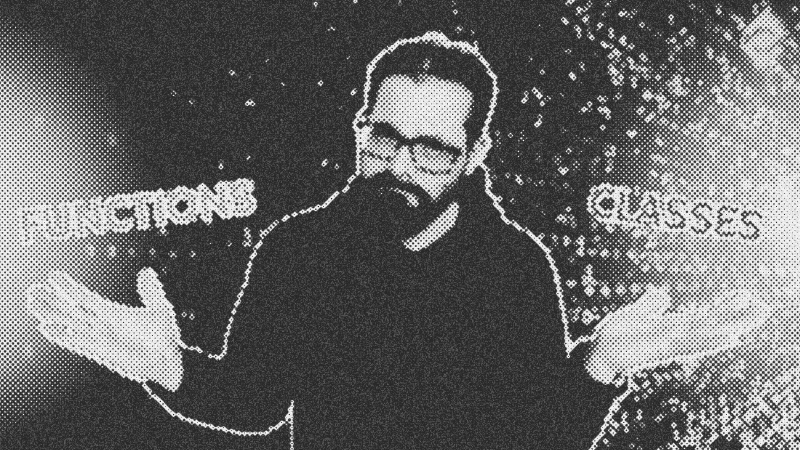
Choosing between a function and a class isn't just a matter of style; it's a structural decision that dictates how your code handles complexity. Functions are action-focused. They take an input, transform it, and return a result. This makes them ideal for data processing pipelines where the primary concern is the sequence of events. Conversely, Classes are state-focused. They group data and behavior together, maintaining an internal history that persists across multiple operations. If you pick the wrong tool, you end up with "god classes" that do too much or a mess of global variables that make your code brittle.
Prerequisites
To get the most out of this guide, you should have a baseline understanding of Python syntax. You should know how to define a basic function and have a passing familiarity with the concept of an object. Understanding how data types like Tuples and dictionaries work in a script will help you see where classes might be overkill.
Key Libraries & Tools
- Python Standard Library: The core toolkit for building both functional and object-oriented scripts.
- CSV Module: Often used for data analysis tasks where functional programming shines.
- Data Classes: A modern Python feature that simplifies class creation by automatically generating boilerplate code.
Code Walkthrough: Functional Data Analysis
When analyzing data, such as a Stack Overflow survey, a functional approach keeps the logic linear and readable.
import csv

def count_appearances(data, column):
    # Logic to count values in a specific column
    pass

def main():
    # Sequence: Load -> Analyze -> Print
    data = load_data("survey.csv")
    counts = count_appearances(data, "Language")
    print_results(counts)
In this pattern, the data flows from one function to the next. We don't need a class here because we aren't maintaining long-term state. If we used a class, we'd likely create a "God Class" that simply acts as a container for methods, adding unnecessary layers of abstraction.
Code Walkthrough: State-Based Bank Accounts
For systems modeling real-world concepts like a Bank Account, classes are indispensable. They allow you to maintain a balance and a transaction history over time.
class BankAccount:
    def __init__(self, initial_balance: int):
        self.balance = initial_balance
        self.transactions = []

    def deposit(self, amount: int):
        self.balance += amount
        self.transactions.append(("DEPOSIT", amount))
Here, the BankAccount object remembers its balance. Trying to manage twenty different account balances using only functions and external variables would lead to a maintenance nightmare.
Syntax Notes & Best Practices
Python is a multi-paradigm language, meaning you don't have to choose just one. You can use Tuples for simple data structures inside a module full of functions, or use standalone functions to orchestrate interactions between multiple classes. Aim for Pure Functions whenever possible—functions that don't modify global state—because they are significantly easier to unit test. If you find yourself writing a class with only one method, it should probably just be a function.
Tips & Gotchas
Avoid deep inheritance trees; they make code rigid and hard to follow. If you are just grouping data without much behavior, use a dataclass to save on syntax. Always ask: "Is this about the flow of data or the structure of an entity?" The answer to that question will always lead you to the right implementation.
- Python
- 25%· programming languages
- Tuples
- 17%· software development
- Bank Account
- 8%· software development
- Classes
- 8%· software development
- Functions
- 8%· software development
- Other topics
- 33%
Functions vs Classes: When to Use Which and Why?
WatchArjanCodes // 10:49

On this channel, I post videos about programming and software design to help you take your coding skills to the next level. I'm an entrepreneur and a university lecturer in computer science, with more than 20 years of experience in software development and design. If you're a software developer and you want to improve your development skills, and learn more about programming in general, make sure to subscribe for helpful videos. I post a video here every Friday. If you have any suggestion for a topic you'd like me to cover, just leave a comment on any of my videos and I'll take it under consideration. Thanks for watching!