Cleaning Your Code: Refactoring Python Code Smells for Professional Design
Overview
Code that works isn't necessarily good code. In software development, a code smell is a hint that something might be wrong with your program's design. While not technically bugs, these patterns often lead to technical debt, fragile architecture, and maintenance nightmares. By identifying and refactoring these smells, you transition from writing scripts that merely function to building robust, scalable systems. This guide focuses on Python specific solutions to common design flaws, emphasizing cohesion and decoupling.
Prerequisites
To follow this tutorial, you should have a solid grasp of Python basics, including OOP concepts like classes and inheritance. Familiarity with exception handling and basic list comprehension will help you appreciate the refactored solutions.
Key Libraries & Tools
- enum: A built-in Python library used to create sets of symbolic names bound to unique, constant values.
- abc: The Abstract Base Classes module, essential for defining blueprints for subclasses.
- PEP 8: The official style guide for Python code that ensures readability.
Code Walkthrough
1. Replacing Strings with Enums
Using strings for categories like roles (e.g., "manager") is risky. A typo causes a silent failure. Instead, use an enum to enforce a strict set of values.
from enum import Enum, auto

class Role(Enum):
    PRESIDENT = auto()
    VICE_PRESIDENT = auto()
    MANAGER = auto()
2. Eliminating Type-Checking with Polymorphism
Using isinstance() to branch logic is a major red flag. It couples your main logic to every single subclass. The fix? Move the logic into the class itself.
from abc import ABC, abstractmethod

class Employee(ABC):
    @abstractmethod
    def pay(self) -> None:
        pass

class HourlyEmployee(Employee):
    def pay(self) -> None:
        print("Paying hourly rate.")
By calling employee.pay(), the Python interpreter decides which version to run at runtime, removing the need for messy if/else chains.
3. Splitting Multi-Purpose Methods
Methods that use a boolean flag to toggle between two behaviors have low cohesion. It is better to have two distinct, clear methods.
# Smelly: def take_holiday(self, payout: bool)
# Clean:
def take_holiday(self):
    # Logic for taking one day off

def payout_holiday(self):
    # Logic for cashing out vacation days
4. Custom Exceptions for Better Context
Don't just raise ValueError. It doesn't tell the caller why the value is wrong. Create a custom exception that carries data.
class VacationShortageError(Exception):
    def __init__(self, requested, remaining):
        self.requested = requested
        self.remaining = remaining
        super().__init__(f"Tried to take {requested} days, but only {remaining} left.")
Syntax Notes
- list comprehension: These provide a concise way to create lists. They replace a multi-line
forloop andappend()call with a single, readable line. - abc: By inheriting from
ABCand using@abstractmethod, you prevent the base class from being instantiated, ensuring all subclasses implement the required interface.
Practical Examples
These refactorings are standard in enterprise software. For instance, in an e-commerce API, using enum for order status (PENDING, SHIPPED, DELIVERED) prevents invalid states. Similarly, moving payment logic into specific "PaymentGateway" subclasses instead of checking types in a central controller keeps the codebase modular.
Tips & Gotchas
- Never swallow exceptions: An empty
except: passblock is a silent killer. It can hide syntax errors or even prevent you from stopping the program withCtrl+C. - Be Descriptive: A variable named
amountis useless.hours_workedorhourly_rate_usdprovides instant context without needing a comment. - DRY (Don't Repeat Yourself): If you see the same three lines of code in four different methods, it's time to extract them into a single, generic function.
- Python
- 28%· programming languages
- enum
- 17%· libraries
- abc
- 11%· libraries
- list comprehension
- 11%· concepts
- code smell
- 6%· concepts
- Other topics
- 28%
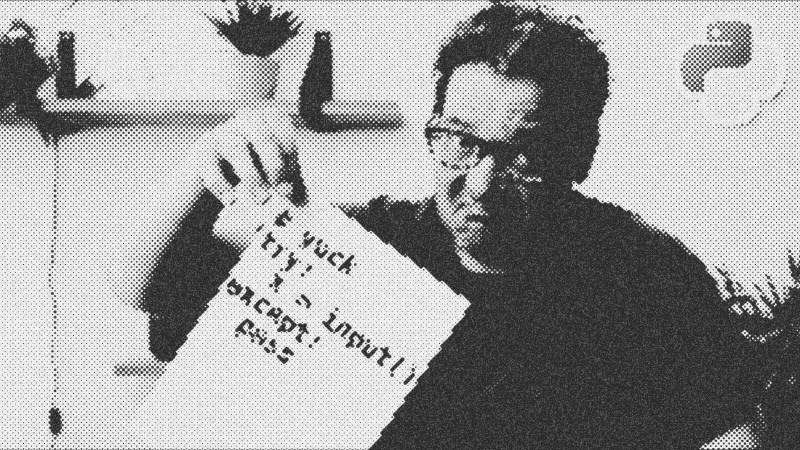
7 Python Mistakes That Instantly Expose Junior Developers
WatchArjanCodes // 22:10

On this channel, I post videos about programming and software design to help you take your coding skills to the next level. I'm an entrepreneur and a university lecturer in computer science, with more than 20 years of experience in software development and design. If you're a software developer and you want to improve your development skills, and learn more about programming in general, make sure to subscribe for helpful videos. I post a video here every Friday. If you have any suggestion for a topic you'd like me to cover, just leave a comment on any of my videos and I'll take it under consideration. Thanks for watching!