The Resilience of SaaS: Why Code is the Easy Part
The Premise of the Great Collapse
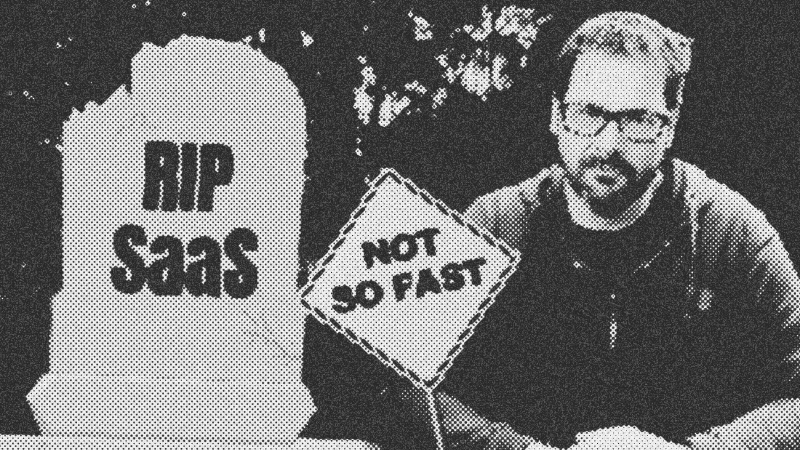
Recent industry whispers and social media trends suggest that Software as a Service is facing an existential crisis. The argument, often echoed by leaders like Satya Nadella, posits that most business applications are merely CRUD databases wrapped in business logic. With the rise of AI agents and "vibe coding," many believe these platforms will collapse into a single, fluid agent era where bespoke internal tools replace expensive subscriptions. While the technical barrier to entry for building software is plummeting, the reality of running a global service remains stubbornly complex.
The Barrier of Invisible Infrastructure
Software development is often the simplest part of a successful SaaS product. High-utility platforms like Stripe or Squarespace do not just offer code; they provide a gateway to massive, regulated ecosystems. Consider Stripe. A developer might "vibe code" a functional payment button in an afternoon, but they cannot code the legal agreements with global banks, compliance with international tax laws, or the trust required to handle millions in transactions. The value lies in the hard-won partnerships and infrastructure that an AI agent cannot simply prompt into existence.
Regulation and the Compliance Moat
Regulatory requirements act as a natural defense for established platforms. An accounting SaaS must adhere to GDPR, ISO security standards, and local tax laws that vary by country. In the Netherlands, for instance, independent accountants often only support specific, validated platforms. You cannot replace a legally compliant audit trail with a custom-coded agent if the bank refuses to grant that agent API access or if the government doesn't recognize the output. These administrative and legal hurdles form a "moat" that protects the SaaS model from being completely disrupted by decentralized AI tools.
The Future of Integrated Intelligence
Instead of dying, SaaS is evolving to absorb the very tools meant to replace it. Platforms are already implementing Model Context Protocol to allow AI agents to interact with their data seamlessly. We are moving toward a hybrid world where graphical user interfaces and chat interfaces coexist. The goal remains efficiency. It is still cheaper and more reliable to pay for a specialized service like Spotify than to build a custom player, negotiate music label licenses, and manage cloud streaming personally. SaaS isn't dead; it's simply getting smarter.
- Stripe
- 15%· companies
- Apple Music
- 8%· companies
- CRUD
- 8%· products
- GDPR
- 8%· products
- GitHub Copilot
- 8%· products
- Other topics
- 54%
Is SaaS Dead? Here's a Senior Engineer's Perspective
WatchArjanCodes // 13:20

On this channel, I post videos about programming and software design to help you take your coding skills to the next level. I'm an entrepreneur and a university lecturer in computer science, with more than 20 years of experience in software development and design. If you're a software developer and you want to improve your development skills, and learn more about programming in general, make sure to subscribe for helpful videos. I post a video here every Friday. If you have any suggestion for a topic you'd like me to cover, just leave a comment on any of my videos and I'll take it under consideration. Thanks for watching!