Beyond the PhD: Dismantling the Assumptions That Stall Your Growth
The Trap of Intellectual Certainty
We often let our past achievements build a wall around our present curiosity. During a transition from academia to the startup world, Arjan discovered that having a PhD didn't protect him from failure; in fact, his intellectual pride fueled it. He dismissed React almost immediately, assuming his custom solutions would naturally outperform an established framework. This ego-driven decision led to a product so complex it eventually collapsed under its own weight. We fall into this same trap when we believe our expertise exempts us from the need to evaluate new tools.
The Survival Instinct of Labels
Our brains crave the safety of categories. In prehistoric times, assuming a tiger was dangerous or a berry was poisonous served as a vital survival mechanism. Today, we apply that same binary logic to software development. We use labels like "functional programmer" or "OOP enthusiast" to put people and technologies into boxes we can easily dismiss. These labels provide a sense of comfort because they remove the burden of questioning our own foundations. If we label a tool as "wrong" or "bloated" without trial, we never have to face the discomfort of being proven wrong.
Radical Awareness as a Practice
Breaking these cycles requires more than just a passing thought; it demands a lifelong commitment to awareness. You must actively identify where you are oversimplifying complex topics to suit your existing worldview. Arjan admits he still struggles with this, initially feeling skeptical of AI coding tools simply because they didn't fit his traditional mental model of programming. Growth happens in the space where you allow someone else's perspective to exist outside of your own context.
The Power of the Critical Mirror
True development rarely happens in a vacuum. We need a community to act as a mirror, reflecting our blind spots back to us. Engaging with critical feedback—even when it stings—keeps our skills sharp and our assumptions in check. When you stop defending your old methods and start listening to why others disagree, you unlock the ability to stay relevant in an industry that changes every single day. Letting go of a long-held assumption might feel destabilizing at first, but the clarity that follows is where real innovation begins.
- Arjan
- 33%· people
- AI coding tools
- 17%· products
- Java
- 17%· products
- Python
- 17%· products
- React
- 17%· products
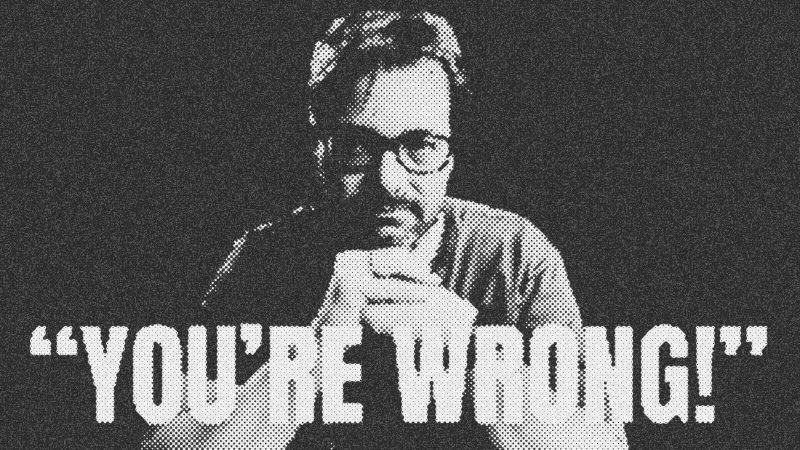
We need to talk.
WatchArjanCodes // 8:12

On this channel, I post videos about programming and software design to help you take your coding skills to the next level. I'm an entrepreneur and a university lecturer in computer science, with more than 20 years of experience in software development and design. If you're a software developer and you want to improve your development skills, and learn more about programming in general, make sure to subscribe for helpful videos. I post a video here every Friday. If you have any suggestion for a topic you'd like me to cover, just leave a comment on any of my videos and I'll take it under consideration. Thanks for watching!