Vincent Koc pushes 3,000 commits daily using autonomous agent factories
Industrializing the source code factory
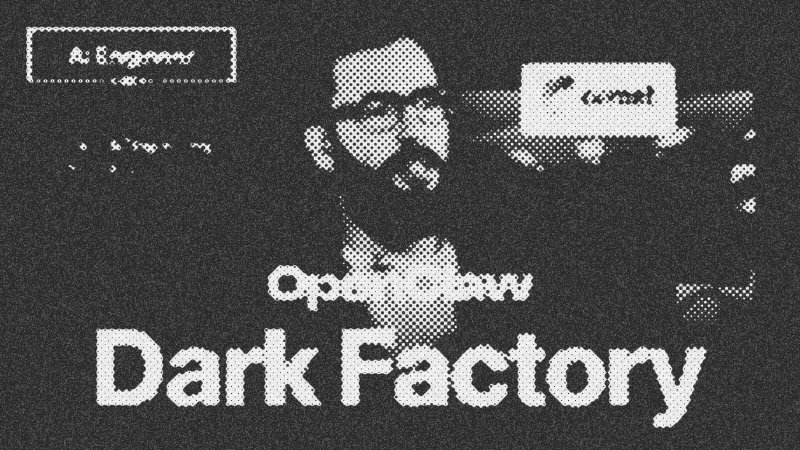
Software development is undergoing a shift comparable to the move from handlooms to centralized mills. Vincent Koc, core maintainer of OpenClaw, describes a world where the engineer’s role is no longer writing syntax but managing a "dark factory" of autonomous agents. This transition moves the primary bottleneck from a developer’s typing speed to their clinical taste and managerial oversight. In this environment, OpenClaw has reached peak velocities of 800 to 3,000 commits per day, a pace that makes traditional peer review and diff-reading obsolete.
Managing the great refactor
The power of this approach was tested during what Koc calls the "great refactor." Working alongside Peter Steinberger, the team overhauled 82% of their core codebase in a single session. By running 60 to 70 agents simultaneously across parallel "swim lanes," they replaced a monolithic structure with a plugin architecture overnight. This involved changing nearly a million lines of code while the maintainers acted as high-level orchestrators. The success of such a massive shift relied on aggressive unit testing that caught regressions, even when the AI code tended toward over-fitting.
Engineering the swim lane workflow
To manage this chaos, Vincent Koc utilizes a concept of "swim lanes"—dedicated, parallel coding sessions organized by task type. One lane might handle documentation via a Geppetto skill gem, while others focus on bug fixes or feature implementation. This requires an "Agent Development Environment" where developers treat agent skills like dotfiles, continuously refining the logic through Vercel deployments and logs. Instead of micromanaging code, the engineer monitors the reasoning process of each lane, ensuring the agents remain aligned with the project’s architectural goals.
Developing the intuition for reasoning tokens
Koc emphasizes that managing agents requires a specific set of soft skills usually reserved for human staff management. He describes a sensory relationship with the output, where he can "feel" when an agent is hallucinating or "waffling" by reading its reasoning tokens. If an agent’s explanation becomes convoluted or illogical, the session is "nuked" and restarted. This intuitive feedback loop is the new standard for efficiency; 2025 was the era of maximum token consumption, but 2026 will be defined by token efficiency and knowing when to stop an agent from wasting compute on the wrong path.
- OpenClaw
- 13%· products
- Vincent Koc
- 13%· people
- AI
- 6%· technologies
- Anthropic
- 6%· companies
- ChatGPT
- 6%· technologies
- Other topics
- 56%
Dark Factory: OpenClaw Ships Faster Than You Can Read the Diff — Vincent Koc, OpenClaw
WatchAI Engineer // 16:44

We turn high signal in-person events for the top AI engineers, founders, leaders, and researchers in the world into the best free learning opportunities for millions around the world here on YouTube. Your subscribes, likes, comments, speaking, attendance, or sponsorships goes a long way toward making our biz model sustainable indefinitely. We strongly believe this industry deserves a better class of community and that we know how to do this well; we just need your support.