Notion engineer Geoffrey Litt says developers must understand AI code
As AI agents generate thousands of lines of code, developers face a critical choice. Many believe human oversight exists solely to check correctness. We treat code review as a simple thumbs-up or thumbs-down bottleneck. But checking if a pull request matches a specification is a shallow task. Over time, AI verification loops will handle correctness checks automatically. If humans only act as correctness gatekeepers, our role in the development loop shrinks to nothing.
The Danger of Accumulating Cognitive Debt
Real understanding is not about policing errors. It is about active participation. When we read and process what an agent writes, we build rich conceptual models. These models allow us to take the next creative leap. Without this, we fall into what scholar Margaret Story calls cognitive debt. It acts like technical debt. You vibe-code smoothly for a while, letting agents make decisions, until you suddenly realize you have no idea how your system functions. You can no longer participate.
Forcing Comprehension with Quizzes and Literate Diffs
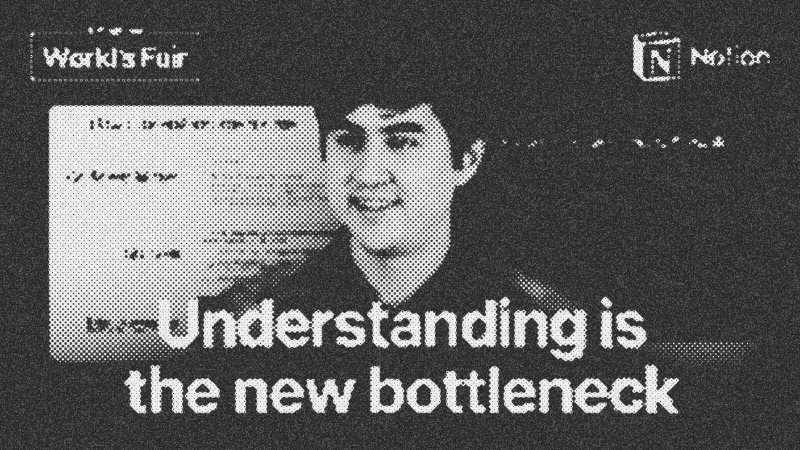
How do we stay in the loop without slowing to a crawl? Geoffrey Litt, a design engineer at Notion, shares a custom skill called explain diff. Instead of raw code changes, the tool generates an interactive explainer document in Notion featuring background concepts, architectural intuition, and interactive simulations.
But reading can make us lazy. Research by Andy Matushak shows that books often fail because readers mistake familiarity for comprehension. To fight this, Litt embeds five-question quizzes at the bottom of his explainer docs. He enforces a strict rule: never send agent-written code to teammates unless you can pass the generated quiz about how it works.
Living in Code with Micro Worlds
We can also use agents to build ephemeral playgrounds. This concept draws from computer science pioneer Seymour Papert and his vision of "mathland"—an environment where children learn mathematical concepts intuitively by interacting with them.
When building an interpreter, Litt had Claude construct a custom debugger UI. This interface let him scrub through execution timelines step-by-step. Another experiment turned a website framework migration into a step-by-step interactive game. These micro worlds let developers open the hood and gain peripheral vision of their systems without the manual friction of building everything from scratch.
Reclaiming the Creative Vision of Personal Computing
Fifty years ago, Alan Kay envisioned personal computers as tools to level up human capability, not replace it. AI agents should not remove us from the creative process. By using agents to build explanations and interactive simulations, we put ourselves deeper into the loop, ensuring we remain active, creative pilots of our technology.
- Notion
- 29%· companies
- Alan Kay
- 14%· people
- Andy Matushak
- 14%· people
- Geoffrey Litt
- 14%· people
- Margaret Story
- 14%· people
- Seymour Papert
- 14%· people
Understanding is the new bottleneck — Geoffrey Litt, Notion
WatchAI Engineer // 19:33

We turn high signal in-person events for the top AI engineers, founders, leaders, and researchers in the world into the best free learning opportunities for millions around the world here on YouTube. Your subscribes, likes, comments, speaking, attendance, or sponsorships goes a long way toward making our biz model sustainable indefinitely. We strongly believe this industry deserves a better class of community and that we know how to do this well; we just need your support.